    Health library

    Will an Online Doctor Prescribe Antibiotics? When the Answer Is Yes, and When It Should Be No

    A virtual clinician can and does prescribe antibiotics, but only when the diagnosis is reliable without an exam and the infection is bacterial. This guide covers which infections fit, which need to be seen or tested, why antibiotics are declined more often than people expect, and how to make a request that gets a clear answer.

    Licensed providersNo insurance neededAges 18+Not for emergencies

    The short answer

    Yes, for the right infection. A licensed clinician can prescribe antibiotics after a telehealth visit when your history gives a reliable diagnosis and the infection is one that antibiotics actually treat. Uncomplicated urinary tract infections in otherwise healthy adults are the classic example.

    No, for infections that need an exam or a test to diagnose, for anything that looks viral, and for anyone whose symptoms suggest something more serious. A clinician who prescribes antibiotics for every request is not doing you a favor.

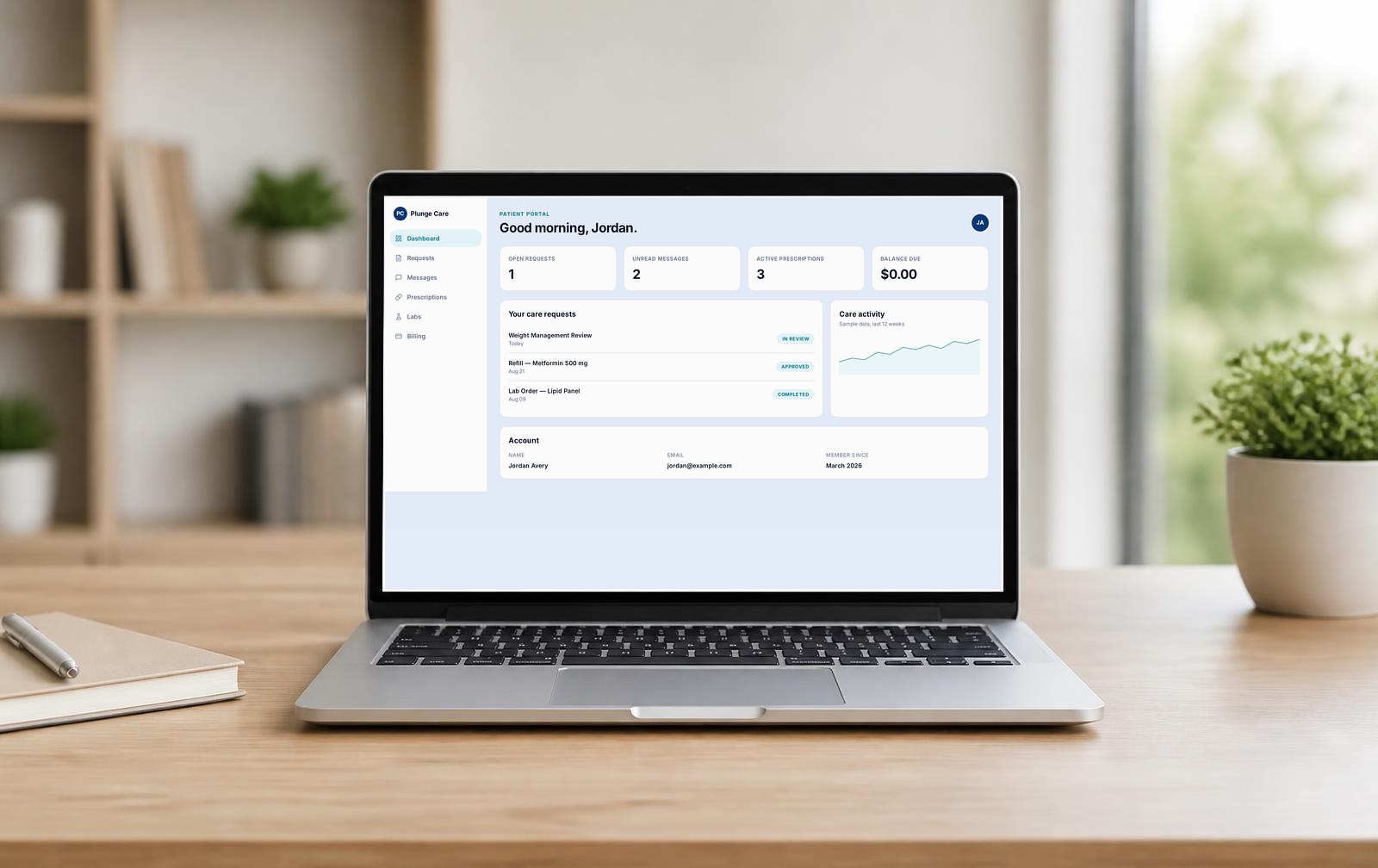
    A laptop on a clean desk showing a demo screenshot of the Plunge Care portal dashboard
    A laptop on a clean desk showing a demo screenshot of the Plunge Care portal dashboard

    Can I get antibiotics without seeing a doctor?

    Not without a clinician, no. Antibiotics are prescription medications in the United States, and no pharmacy will dispense them without a prescription from a licensed prescriber. What you can skip is the office visit: a clinician can evaluate you by telehealth, by video or through a written exchange, and send the prescription electronically to your pharmacy.

    Websites that ship antibiotics with no evaluation, or from outside the United States, are illegal and dangerous. Beyond the legal problem, the wrong antibiotic for the wrong infection does nothing for you and makes the next infection harder to treat.

    Not for emergencies. Plunge Care is not for emergencies. If you're experiencing a medical emergency, call 911.

    Clinician-led decisions. All treatment decisions are made by the reviewing licensed provider. Plunge Care does not guarantee any specific prescription or outcome.

    Infections that telehealth clinicians commonly treat with antibiotics

    • Uncomplicated urinary tract infections in non-pregnant adult women with typical symptoms and no fever, back pain or vomiting. This is the most common and best-supported use of telehealth antibiotics.
    • Bacterial sinus infections, when symptoms have lasted more than ten days without improving, or worsened after initially getting better. Most sinus infections are viral and resolve without antibiotics.
    • Some skin infections that can be assessed from clear photos, such as mild cellulitis without fever or rapid spread, and some infected cuts or bites.
    • Certain sexually transmitted infections after a positive test, or as treatment for a confirmed exposure.
    • Travellers' diarrhea prescriptions for people about to travel, in some services.
    • Acne, where oral or topical antibiotics are part of a longer treatment plan rather than a short course.

    Infections that usually need an exam or a test first

    • Sore throat: strep throat is diagnosed with a swab, and most sore throats are viral. Many clinicians will not prescribe without a positive test, especially for adults.
    • Ear pain: diagnosing a middle-ear infection requires looking in the ear. Children with ear pain should be seen in person.
    • Cough with fever or shortness of breath: pneumonia versus bronchitis cannot be told apart by description, and bronchitis is usually viral.
    • Eye infections: pink eye is usually viral or allergic; a clinician may treat bacterial conjunctivitis from a good photo and history, but painful eyes or vision changes need an exam.
    • Any infection with high fever, severe pain, rapid spread, confusion, trouble breathing or signs of dehydration. Those need in-person care, sometimes urgently.
    • Urinary symptoms in men, in pregnant women, in children, or with back pain or fever, which point to a more complicated infection.

    Why a responsible clinician says no to antibiotics

    Most upper respiratory infections, including the large majority of colds, coughs, sore throats and sinus infections, are viral. Antibiotics do not touch viruses. Taking them anyway exposes you to side effects, from stomach upset to serious allergic reactions and C. difficile infection, with no benefit.

    Every unnecessary course also contributes to antibiotic resistance, which is why the CDC and every professional society push clinicians to prescribe only when the diagnosis supports it. A telehealth clinician who declines a request for a cold, or asks you to get a strep test first, is practising good medicine, not being difficult.

    The right outcome of a declined request is a clear explanation, advice on symptom relief, and guidance on what would change the picture and when to be seen in person.

    How to request antibiotics so you get a clear answer

    • Describe symptoms precisely: what, where, since when, better or worse, and whether you have a fever.
    • List relevant history: previous similar infections, antibiotic allergies, pregnancy or the possibility of it, kidney problems, recent antibiotic use.
    • For skin problems, include clear, well-lit photos with something for scale, and note whether the area is spreading.
    • Mention any test results you already have, such as a home urine test or a positive STI result.
    • Name your pharmacy and confirm it is open.
    • Answer follow-up questions quickly. The clinician needs them to decide safely.

    How Plunge Care handles antibiotic requests

    You submit a written request through a secure portal describing your symptoms and history. A clinician licensed in your state reviews it personally and asks questions in the same thread. If a bacterial infection is likely and antibiotics are appropriate, the prescription is sent electronically to the pharmacy you choose. If the picture suggests a viral illness, or a condition that needs an exam or test, the clinician tells you plainly and points you to the right care.

    Plunge Care does not sell medication, does not bill insurance and is not for emergencies. You see the visit fee before you confirm, and nothing is charged until a clinician accepts your request.

    Antibiotics are prescribed only when clinically appropriate. Approval is never guaranteed. Severe symptoms, high fever, trouble breathing or rapidly spreading infection need in-person or emergency care.
    Frequently Asked Questions

    Often yes, for an otherwise healthy, non-pregnant adult woman with typical symptoms and no fever or back pain. Men, children, pregnant women and anyone with fever or flank pain usually need testing or an in-person visit.

    Yes when the history suggests a bacterial infection, typically symptoms lasting more than ten days or worsening after improving. Most sinus infections are viral and are treated with symptom relief instead.

    Most clinicians want a positive strep test first, because most sore throats are viral. Some telehealth services can order a test at a nearby lab or pharmacy and prescribe if it is positive.

    Usually because the symptoms point to a viral illness, the diagnosis needs an exam or test, or your history raised a safety concern. The clinician should explain the reason and what to do next.

    Children with suspected infections, especially ear pain or fever, should be seen in person by a pediatric clinician who can examine them.

    How it works

    1. 1

      Create your account and share a brief health history.

    2. 2

      Submit your request through your secure patient portal.

    3. 3

      A licensed provider in your state reviews your request.

    4. 4

      If appropriate, your prescription or order is sent to your pharmacy or lab.

    A laptop on a clean desk showing a demo screenshot of the Plunge Care portal dashboard