    Health library

    What Medications Can Be Prescribed via Telehealth, and What Cannot

    Most everyday medications can be prescribed after a telehealth visit. Some need a test, a reading or an in-person exam before a clinician can prescribe them safely, and a small group is restricted by law. This guide sorts them out so you know what to expect before you start a request.

    Licensed providersNo insurance neededAges 18+Not for emergencies

    The short answer

    A licensed clinician can prescribe any non-controlled medication by telehealth if they can evaluate you adequately without an exam. In practice that covers most refills of ongoing medications and many new treatments for common conditions. It excludes controlled substances on most platforms, medications that require monitoring the clinician cannot do remotely, and anything for a problem that needs hands-on assessment.

    The deciding question is never the drug alone. It is whether a careful clinician can make a safe decision about you, for that drug, with the information a remote visit provides.

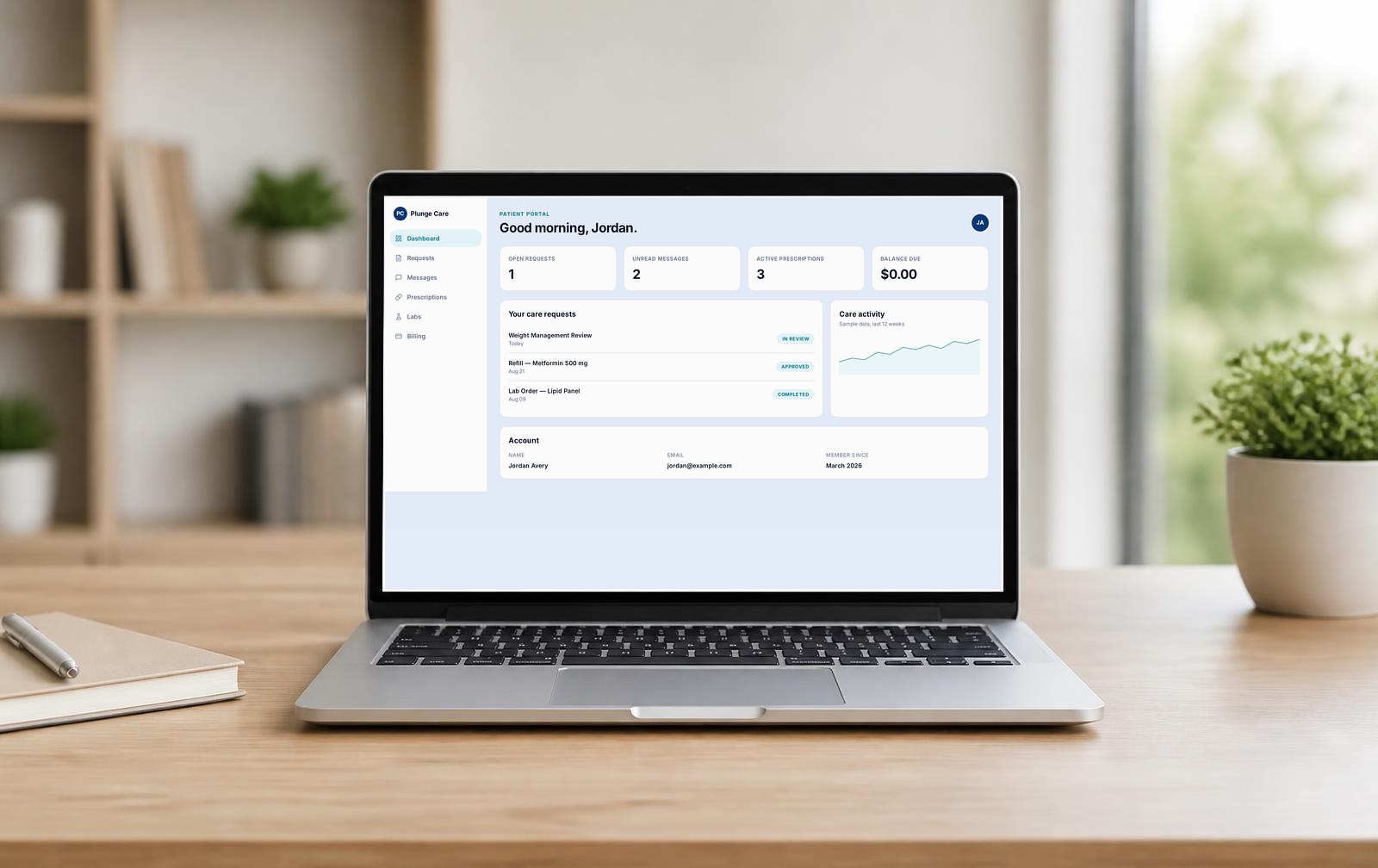
    A laptop on a clean desk showing a demo screenshot of the Plunge Care portal dashboard
    A laptop on a clean desk showing a demo screenshot of the Plunge Care portal dashboard

    Medications commonly prescribed through telehealth

    These groups are routinely handled by telehealth, especially as continuations of treatment you are already established on.

    • Blood pressure medications such as lisinopril, losartan, amlodipine and hydrochlorothiazide, usually as refills, ideally with recent home readings.
    • Cholesterol medications such as atorvastatin and rosuvastatin, with a recent lipid panel on file or ordered.
    • Oral diabetes medications such as metformin, with recent blood sugar or A1c results.
    • Asthma and allergy medications: rescue and controller inhalers for established asthma, antihistamines, nasal steroids, and some allergy eye drops.
    • Birth control: pills, patches and rings, after a blood pressure reading and a review of risk factors.
    • Skin conditions: topical and some oral acne treatments, eczema and rosacea treatments, antifungals, and treatment for conditions a clinician can assess from clear photos.
    • Antibiotics for specific infections where the diagnosis is reliable from history, such as uncomplicated urinary tract infections in otherwise healthy adults.
    • Acid reflux and GI medications such as omeprazole and famotidine.
    • Thyroid replacement such as levothyroxine, as a refill with recent thyroid labs.
    • Mental health medications such as SSRIs and SNRIs, as continuations or new starts after an appropriate assessment, excluding controlled substances.
    • Weight-management medications including GLP-1 agonists, on services that offer them, after a thorough review of history, labs and eligibility.
    • Erectile dysfunction, hair loss, migraine, smoking cessation and motion sickness medications, after a history review.

    Not for emergencies. Plunge Care is not for emergencies. If you're experiencing a medical emergency, call 911.

    Clinician-led decisions. All treatment decisions are made by the reviewing licensed provider. Plunge Care does not guarantee any specific prescription or outcome.

    Medications that usually need a test, a reading or an exam first

    • Any medication dosed against a lab value: thyroid medication, cholesterol medication, blood thinners, many diabetes medications. A clinician may order the lab and prescribe afterward.
    • Antibiotics for conditions that need confirmation: strep throat, ear infections, pneumonia and most skin infections usually require an exam or a test rather than treatment by description alone.
    • New blood pressure treatment with no readings. A clinician will want recent measurements before starting or changing a dose.
    • Anything for abdominal pain, chest symptoms, a breast or testicular lump, a swollen joint, a head injury or a wound that may be deeply infected.
    • Insulin and injectables that require in-person teaching to start, though refills are often handled remotely once you are established.

    Medications telehealth services usually will not prescribe

    Controlled substances are the main category. Federal DEA rules restrict prescribing them without an in-person visit; temporary flexibilities exist but are extended year to year, and most direct-pay telehealth services decline the category entirely. Plunge Care never prescribes controlled substances.

    • Stimulants for ADHD such as amphetamine salts and methylphenidate.
    • Benzodiazepines for anxiety or sleep such as alprazolam, lorazepam and clonazepam.
    • Opioid pain medications such as oxycodone, hydrocodone and tramadol.
    • Sleep medications in controlled classes such as zolpidem.
    • Gabapentin and pregabalin in states that schedule them, and testosterone and other anabolic agents.
    • Medications for a child or for someone other than the patient who completed the visit.

    Refills versus new prescriptions

    Refills are the easiest telehealth request. You are established on a medication, it is working, and you need continuity. Bring the exact name, strength and directions, your pharmacy, your other medications and allergies, and any recent readings or labs. Expect the clinician to ask how long you have taken it, who prescribed it and when you were last seen in person, and to limit the supply if you are overdue for monitoring.

    New prescriptions require more. The clinician must be satisfied with the diagnosis, your eligibility and the safety of the medication for you, which may mean more questions, a photo, a home reading or a lab before anything is sent. A quick no, with a clear reason and a next step, is the right outcome when the information is not enough.

    How to prepare so your request goes smoothly

    • List every medication and supplement you take, with doses, and every allergy.
    • Know your diagnoses and roughly when they were made and by whom.
    • Gather recent numbers: blood pressure readings, blood sugar, weight, the date of your last labs.
    • Take clear, well-lit photos of any skin problem, including something for scale.
    • Choose a pharmacy that is open and confirm it accepts electronic prescriptions, which nearly all do.
    • Answer follow-up questions promptly; it is the main thing within your control that speeds a decision.

    How Plunge Care handles medication requests

    You describe what you need in a written request through a secure portal. A clinician licensed in your state reviews it personally, asks follow-up questions in the same thread, and decides whether the medication is appropriate. If it is, the prescription goes electronically to the pharmacy you choose. If it is not, you are told why and what kind of care to seek instead.

    Plunge Care does not sell medication, does not bill insurance and never prescribes controlled substances. You see the visit fee before you confirm, and nothing is charged until a clinician accepts your request.

    Approval is never guaranteed. Whether a medication is appropriate for you is a clinical decision made by a licensed provider.
    Frequently Asked Questions

    Non-controlled antidepressants and anti-anxiety medications such as SSRIs and SNRIs can be prescribed after an appropriate telehealth assessment. Benzodiazepines are controlled substances and are not prescribed on Plunge Care.

    Stimulants are controlled substances. Some services prescribe them under temporary federal rules; Plunge Care does not prescribe any controlled substance.

    Usually yes, if the medication is non-controlled, you are stable on it, and you can describe it accurately. The clinician may limit the supply and ask you to follow up with your regular doctor for monitoring.

    Some services, including Plunge Care, review requests for weight-management medications including GLP-1 agonists after a thorough history and lab review. Eligibility is a clinical decision, and these visits typically cost more than a standard visit.

    Common reasons: the condition needs an exam or test first, the medication is controlled or needs monitoring, your history raised a safety concern, or there was not enough information. A good service tells you the reason and what to do next.

    How it works

    1. 1

      Create your account and share a brief health history.

    2. 2

      Submit your request through your secure patient portal.

    3. 3

      A licensed provider in your state reviews your request.

    4. 4

      If appropriate, your prescription or order is sent to your pharmacy or lab.

    A laptop on a clean desk showing a demo screenshot of the Plunge Care portal dashboard