    Health library

    What Can and Cannot Be Treated With Telemedicine? Conditions, Eligibility and the Limits of a Virtual Visit

    Telemedicine handles a surprising share of everyday care and is wrong for a specific set of problems. This guide lists the conditions that are treated well remotely, the ones that are not, what makes someone ineligible for a telehealth appointment, and the disadvantages of virtual visits you should weigh before booking one.

    Licensed providersNo insurance neededAges 18+Not for emergencies

    The short answer

    Telemedicine works for problems a clinician can assess safely from your history, your description, photos, home readings and test results, and for the ongoing management of conditions that are already diagnosed. It does not work for problems that need a physical examination, imaging or urgent intervention, and it is never appropriate for emergencies.

    If you remember one rule: telemedicine is good at deciding, bad at examining. Anything where the decision depends on hands, instruments or a scan belongs in person.

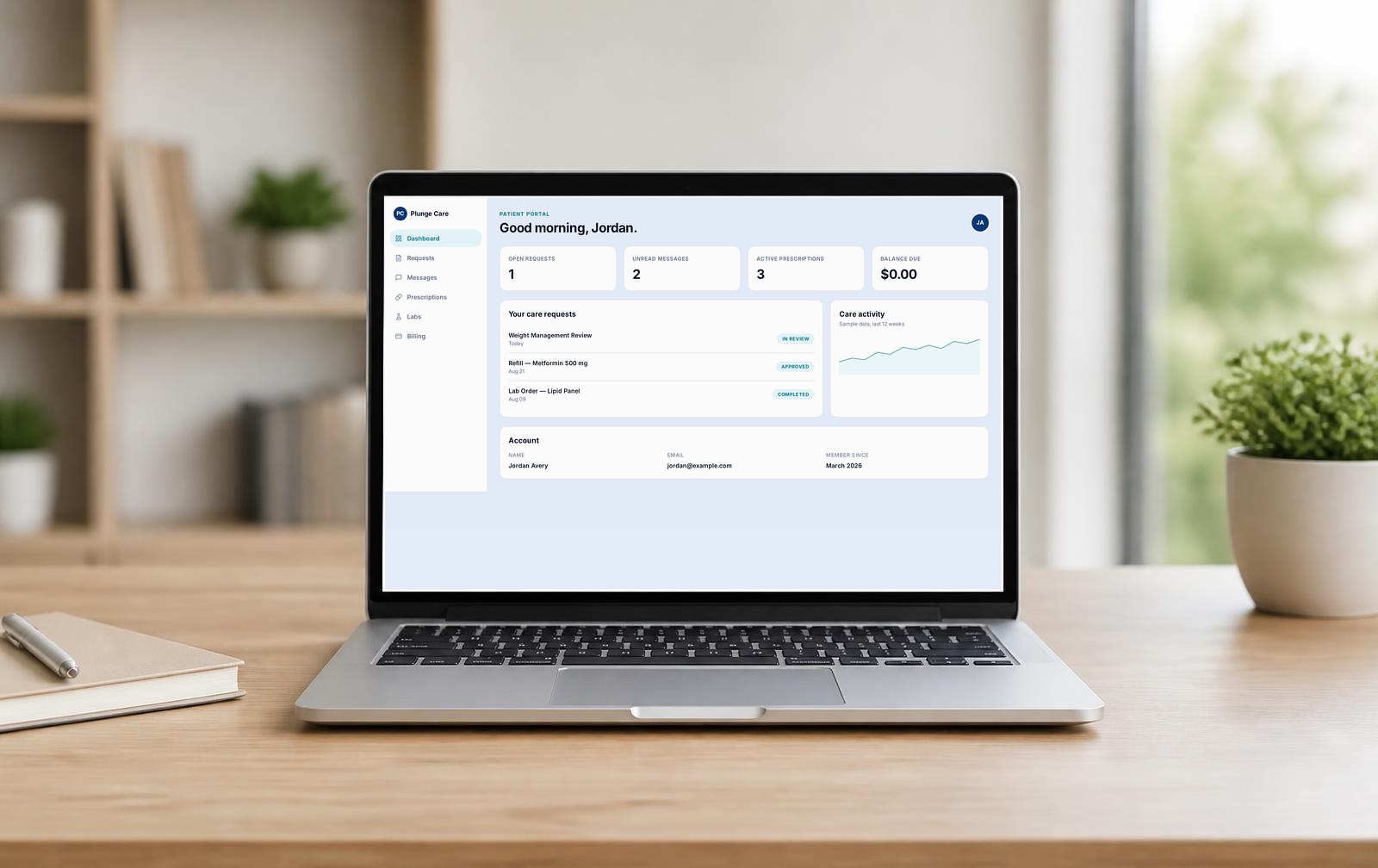
    A laptop on a clean desk showing a demo screenshot of the Plunge Care portal dashboard
    A laptop on a clean desk showing a demo screenshot of the Plunge Care portal dashboard

    Conditions commonly treated with telemedicine

    People often ask for two conditions that can be treated using telehealth. Urinary tract infections and acne are the textbook pair: both are diagnosed reliably from history and photos and treated with prescriptions. The full list is much longer.

    • Infections with a reliable history: uncomplicated UTIs, bacterial sinus infections, some skin infections, yeast infections, bacterial vaginosis, some sexually transmitted infections after testing.
    • Skin: acne, eczema, rosacea, rashes, hives, insect bites, toenail fungus, scabies, cold sores, mild psoriasis flares.
    • Ongoing conditions and refills: high blood pressure, high cholesterol, type 2 diabetes on oral medication, asthma, hypothyroidism, acid reflux, allergies.
    • Sexual and reproductive health: birth control, erectile dysfunction, perimenopause and menopause symptoms, hormone replacement follow-up.
    • Mental health: depression and anxiety evaluation and follow-up with non-controlled medication, insomnia, smoking cessation.
    • Weight management, including GLP-1 medications, with labs and follow-up.
    • Minor illnesses: colds, flu, COVID, mild bronchitis, pink eye, mild nausea or diarrhea, where the main job is advice, symptom relief and spotting red flags.
    • Questions and coordination: test-result reviews, medication side effects, referrals, work or school notes.

    Not for emergencies. Plunge Care is not for emergencies. If you're experiencing a medical emergency, call 911.

    Clinician-led decisions. All treatment decisions are made by the reviewing licensed provider. Plunge Care does not guarantee any specific prescription or outcome.

    What conditions cannot be treated with telemedicine?

    • Emergencies: chest pain, trouble breathing, stroke symptoms, severe bleeding, serious injury, severe allergic reaction, overdose, suicidal thoughts with a plan. Call 911.
    • Anything that needs a hands-on exam to diagnose: ear infections, abdominal pain, a lump, a swollen or injured joint, a possible fracture, a deep or infected wound.
    • Anything that needs imaging or urgent testing: suspected pneumonia, kidney stones, appendicitis, head injury, blood clots.
    • High fever in infants under three months, and most illness in young children, where examination matters more.
    • Chronic pain needing opioids, ADHD needing stimulants, and anxiety or sleep needing benzodiazepines: these are controlled substances, restricted by law and declined by most services.
    • Conditions needing a procedure: lacerations, abscess drainage, joint injections, IUD insertion, wart removal.
    • New, unexplained or rapidly worsening symptoms, especially unexplained weight loss, persistent fever, or neurological changes.

    What makes a patient ineligible for a telehealth appointment?

    Beyond the condition itself, a few things about the patient make a telehealth visit unsuitable or impossible.

    • Location: you must be physically in a state where the clinician is licensed at the time of the visit. Being out of state, even on vacation, can make you ineligible with that clinician.
    • Age: many direct-pay services treat adults only, and others set a minimum age for video visits. Children generally need a pediatric service or in-person care.
    • Pregnancy: many conditions that are routine in other adults, UTIs included, need in-person care in pregnancy.
    • Complexity: multiple serious conditions, recent hospitalization, or medications that need close monitoring may be beyond what a one-off telehealth visit can safely handle.
    • Inability to communicate: if you cannot see, hear, read or respond well enough for the clinician to evaluate you, and no interpreter or support is available, an in-person visit is safer.
    • Insurance rules: some plans cover telehealth only from their designated vendor or require an established relationship; this affects payment, not safety.
    • A clinician's judgment: any clinician can decide that your specific situation needs an exam, and a good one will tell you why.

    What are the disadvantages of virtual visits?

    • No physical exam, so some diagnoses are impossible and others less certain.
    • Technology barriers for people without good internet, a suitable device or comfort with apps; asynchronous and phone visits reduce this.
    • Fragmented records when you use a service your regular doctor does not know about. Forward your visit summary.
    • Variable quality: some high-volume services feel scripted, and some are built to sell a product rather than to treat you.
    • Privacy depends on the platform; consumer apps and wellness services outside HIPAA are a risk.
    • A failed visit costs time: if the problem turns out to need an exam, you still have to go in.

    How to tell which kind of care you need

    • Severe, sudden, or getting worse fast: emergency room or 911.
    • Needs someone to look, touch or scan: urgent care or your doctor's office.
    • You know what it is and what you need, or it is a common problem a clinician can judge from history: telemedicine.
    • You are not sure: a nurse line, your plan's telehealth triage, or a telemedicine clinician who will tell you if you need to be seen.

    How Plunge Care decides

    You submit a written request through a secure portal. A clinician licensed in your state reviews it personally and asks questions in the same thread. If your problem is one telemedicine handles well, they treat it and, when appropriate, send a prescription to the pharmacy you choose. If it needs an exam, a test or emergency care, they tell you plainly and direct you there, and you are not charged.

    Plunge Care is licensed in all 50 states and is onboarding providers nationwide. It does not sell medication, does not bill insurance, never prescribes controlled substances, and is not for emergencies.

    Approval is never guaranteed. Whether a condition can be treated remotely is a clinical decision made by a licensed provider.
    Frequently Asked Questions

    Uncomplicated urinary tract infections and acne are the classic examples. Both are diagnosed reliably from history and photos and treated with prescriptions sent to your pharmacy.

    Not reliably. Diagnosing a middle-ear infection requires looking in the ear with an otoscope. Ear pain, especially in children, needs an in-person exam.

    Only with a clinician licensed in the state you are in at the time. Services that operate nationwide route you to a clinician licensed where you are.

    Follow that advice; it is the system working. A good service does not charge you for a visit it could not complete and tells you what kind of care to seek.

    Yes for evaluation, therapy and follow-up with non-controlled medications. It is not a crisis service; if you are in crisis, call or text 988 or call 911.

    How it works

    1. 1

      Create your account and share a brief health history.

    2. 2

      Submit your request through your secure patient portal.

    3. 3

      A licensed provider in your state reviews your request.

    4. 4

      If appropriate, your prescription or order is sent to your pharmacy or lab.

    A laptop on a clean desk showing a demo screenshot of the Plunge Care portal dashboard