    Health library

    Telepsychiatry: How It Works, What It Costs, and Its Disadvantages

    Mental health care moved online faster than any other specialty and mostly stayed there, because evaluation and follow-up rarely need a physical exam. Here is how telepsychiatry works, what it costs, what can and cannot be prescribed remotely, and the real disadvantages to weigh.

    Licensed providersNo insurance neededAges 18+Not for emergencies

    The short answer

    Telepsychiatry is psychiatric evaluation, medication management and sometimes therapy delivered by video, phone or secure messaging. For depression, anxiety, insomnia and follow-up of stable conditions, outcomes are comparable to in-person care, and access is far better. Its limits are crisis situations, conditions that need physical assessment or lab monitoring, and controlled medications such as benzodiazepines and stimulants, which are restricted online.

    Cost depends on who provides it and how you pay: psychiatrists cost more than nurse practitioners, insurers cover telepsychiatry like other mental health care, and direct-pay services charge per visit or per month.

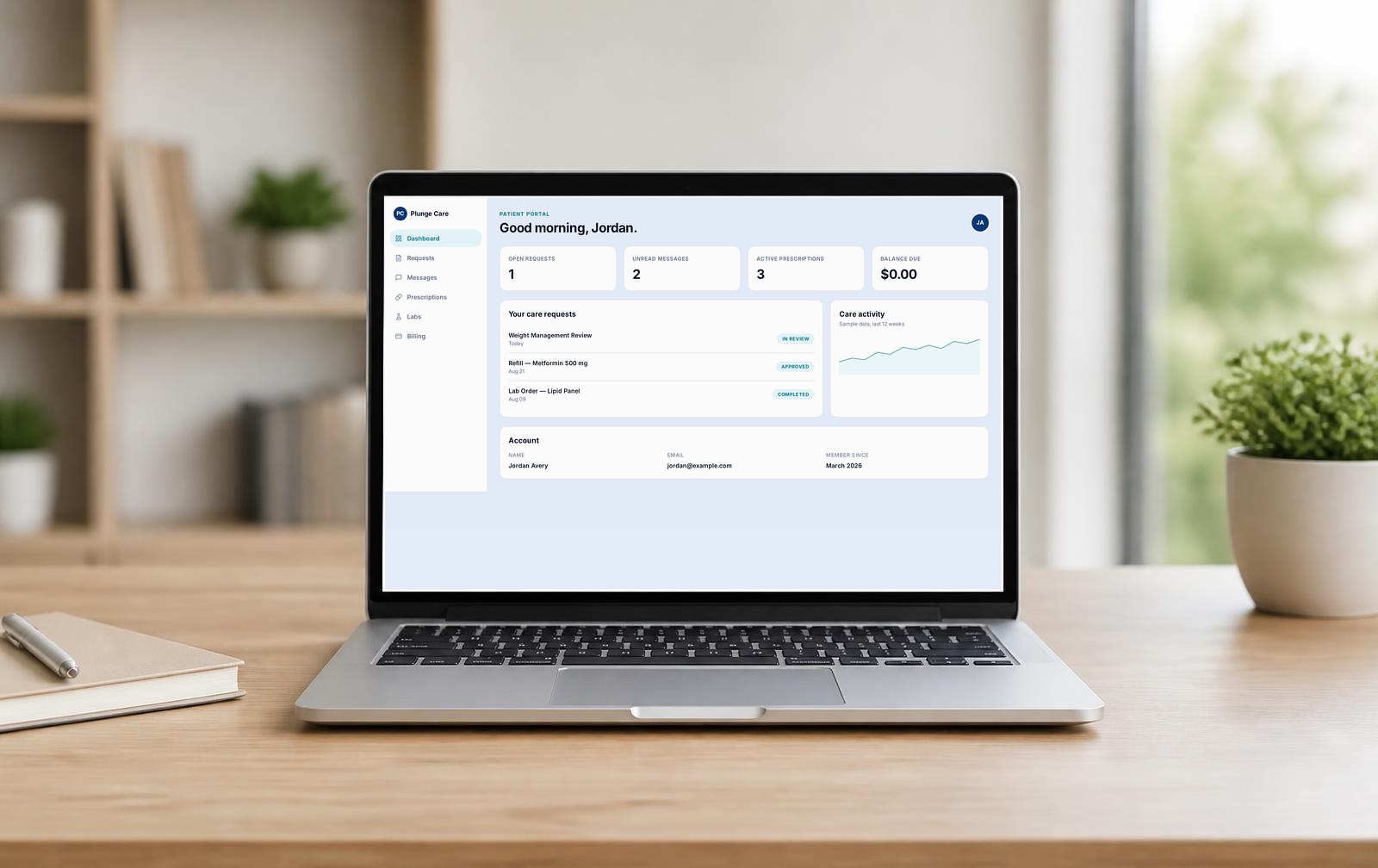
    A laptop on a clean desk showing a demo screenshot of the Plunge Care portal dashboard
    A laptop on a clean desk showing a demo screenshot of the Plunge Care portal dashboard

    How a telepsychiatry visit works

    • An initial evaluation, usually by video and typically forty-five to sixty minutes: your history, symptoms, past treatment, substance use, family history, medical conditions and current medications, plus standardized screening questionnaires.
    • A diagnosis and plan: medication, therapy, both, or a referral. Non-controlled medications such as SSRIs, SNRIs, bupropion, buspirone, hydroxyzine, trazodone and non-stimulant ADHD medications can be prescribed and sent to your pharmacy.
    • Follow-up visits, usually fifteen to thirty minutes, every few weeks at first to adjust doses and manage side effects, then less often once you are stable. Some services handle routine follow-up by secure message.
    • Coordination: a good telepsychiatrist shares the plan with your primary care clinician and orders labs when a medication requires them.

    Not for emergencies. Plunge Care is not for emergencies. If you're experiencing a medical emergency, call 911.

    Clinician-led decisions. All treatment decisions are made by the reviewing licensed provider. Plunge Care does not guarantee any specific prescription or outcome.

    How much does telepsychiatry cost?

    With insurance, telepsychiatry is covered like any other mental health visit under federal parity law and state telehealth coverage laws; New York requires insurers to cover telehealth services they would cover in person. You pay your specialist copay or coinsurance. Many large telehealth companies deliver mental health care through employer and plan benefits at low or no copay.

    Without insurance, cost depends on the clinician and the model. A psychiatrist's initial evaluation costs several times a follow-up visit; psychiatric nurse practitioners typically charge less; and subscription services bundle visits and messaging into a monthly fee, sometimes with the medication included. As with all telehealth, the honest comparison is the total cost over the months you will be in treatment, not the first visit.

    For medication management of common conditions, a flat-fee telehealth clinic with a clinician who can prescribe non-controlled medication is usually the least expensive legitimate route; Plunge Care shows the exact fee before you confirm.

    What are the disadvantages of telepsychiatry?

    • Crisis limits: a video visit cannot keep you safe in an acute crisis. Telepsychiatrists must have a plan for emergencies and will send you to in-person care when risk is high.
    • No physical assessment: some psychiatric symptoms have medical causes, such as thyroid disease, that need an exam and labs. Good telepsychiatrists order labs and coordinate with primary care.
    • Controlled medications: benzodiazepines, stimulants and some sleep medications are restricted by federal rules and declined by most services, which is a real gap for some patients.
    • Rapport and nuance: body language, hygiene, motor signs and the feel of a room carry information that a screen flattens. Many clinicians and patients adjust; some do not.
    • Privacy at home: it can be hard to find a private space, especially for teenagers or people in difficult households.
    • Fragmentation: subscription services that start medication without involving your other clinicians can leave nobody watching the whole picture.
    • Technology and access barriers, as with all telehealth.

    Who should see a psychiatrist in person

    • Anyone with active suicidal or homicidal thoughts, psychosis, mania, or severe agitation.
    • People with eating disorders at medical risk, severe substance withdrawal, or symptoms that may have a medical cause.
    • Patients who need medications requiring close monitoring, such as lithium or clozapine, at least for initiation.
    • Children and adolescents for initial evaluation, in most cases.
    • Anyone who has tried telepsychiatry and found it did not work for them. Preference matters.

    If you are in crisis, call or text 988 or call 911. Telepsychiatry is not a crisis service.

    How Plunge Care handles mental health requests

    Plunge Care is not a psychiatry practice, but its clinicians review requests for depression and anxiety medication. You describe your situation in a written request through a secure portal; a clinician licensed in your state reviews it personally, asks follow-up questions in the same thread, and, when appropriate, prescribes or continues non-controlled medication such as an SSRI and sends it to the pharmacy you choose. Clinicians never prescribe benzodiazepines, stimulants or other controlled substances, and they refer you to a psychiatrist or in-person care when that is what you need.

    Plunge Care is licensed in all 50 states and is onboarding providers nationwide. It does not bill insurance or sell medication, and it is not for emergencies. You see the visit fee before you confirm, and nothing is charged until a clinician accepts your request.
    Frequently Asked Questions

    For depression, anxiety and medication follow-up, research generally finds comparable outcomes and better attendance. It is not appropriate for acute crises or conditions needing physical assessment.

    These are controlled substances. Federal rules restrict telehealth prescribing, and most services decline them. Some specialist practices prescribe to established patients under current temporary rules with video visits and monitoring.

    Yes, like other mental health care, under parity and state telehealth coverage laws. Your copay applies, and the clinician must be in network.

    Yes. Many services, including Plunge Care, can evaluate and prescribe non-controlled antidepressants when appropriate, and refer you to psychiatry for complex cases.

    How it works

    1. 1

      Create your account and share a brief health history.

    2. 2

      Submit your request through your secure patient portal.

    3. 3

      A licensed provider in your state reviews your request.

    4. 4

      If appropriate, your prescription or order is sent to your pharmacy or lab.

    A laptop on a clean desk showing a demo screenshot of the Plunge Care portal dashboard