Urgent, But Not an Emergency
Plunge Care handles urgent, non-emergency care: the things that shouldn't wait weeks but don't belong in an emergency room. For blood pressure, that can look like:
A clinician can review these, continue or adjust your medication when that's appropriate, and tell you plainly if you need to be seen in person.
An emergency is different. Chest pain, a sudden severe headache, shortness of breath, fainting, confusion, weakness or numbness on one side of the body, trouble speaking, or vision changes need immediate care. So does a very high reading with any of these symptoms. Call 911 or go to the nearest emergency room. Do not submit an online request.
- You've run out, or will within a few days.
- You're having a side effect you want reviewed, such as a persistent dry cough or feeling lightheaded when you stand.
- Your home readings are running higher than usual, but you feel well.
- You've missed doses and aren't sure how to restart safely.
What You Need Before You Start
A few details make the request quick and clean:
You do not need a fax machine, a printed chart, or a phone call to your old office.
- The medication name, strength, and how you take it
- The name and location of your preferred pharmacy
- Your most recent blood pressure readings, if you check at home
- A list of your other medications and any allergies
- The name of the clinician who prescribed it, if you know it
Step 1: Start your request
Open the request flow and describe what you need, such as a refill of your current blood pressure medication. Be specific about the drug and dose. Plain language is fine.
Step 2: Share your history
Answer the intake questions honestly. Blood pressure medication interacts with a lot: other prescriptions, over-the-counter pain relievers like ibuprofen and naproxen, pregnancy, kidney function, and how your numbers have been trending. The clinician needs the full picture to make a safe decision. Leaving out details does not speed anything up. It only makes a "no" more likely.
Step 3: See your price before you confirm
You see the exact price before you confirm anything. No membership, no subscription, no insurance required, and no surprise line items at the end. If the price works for you, you confirm. If it does not, you walk away and nothing happens.
Step 4: A licensed clinician reviews it
Your request is read personally by a clinician licensed in your state, usually the same day and always within one business day. That clinician decides whether a refill is appropriate, and the same clinician follows your case from there.
Step 5: Your prescription goes to your pharmacy
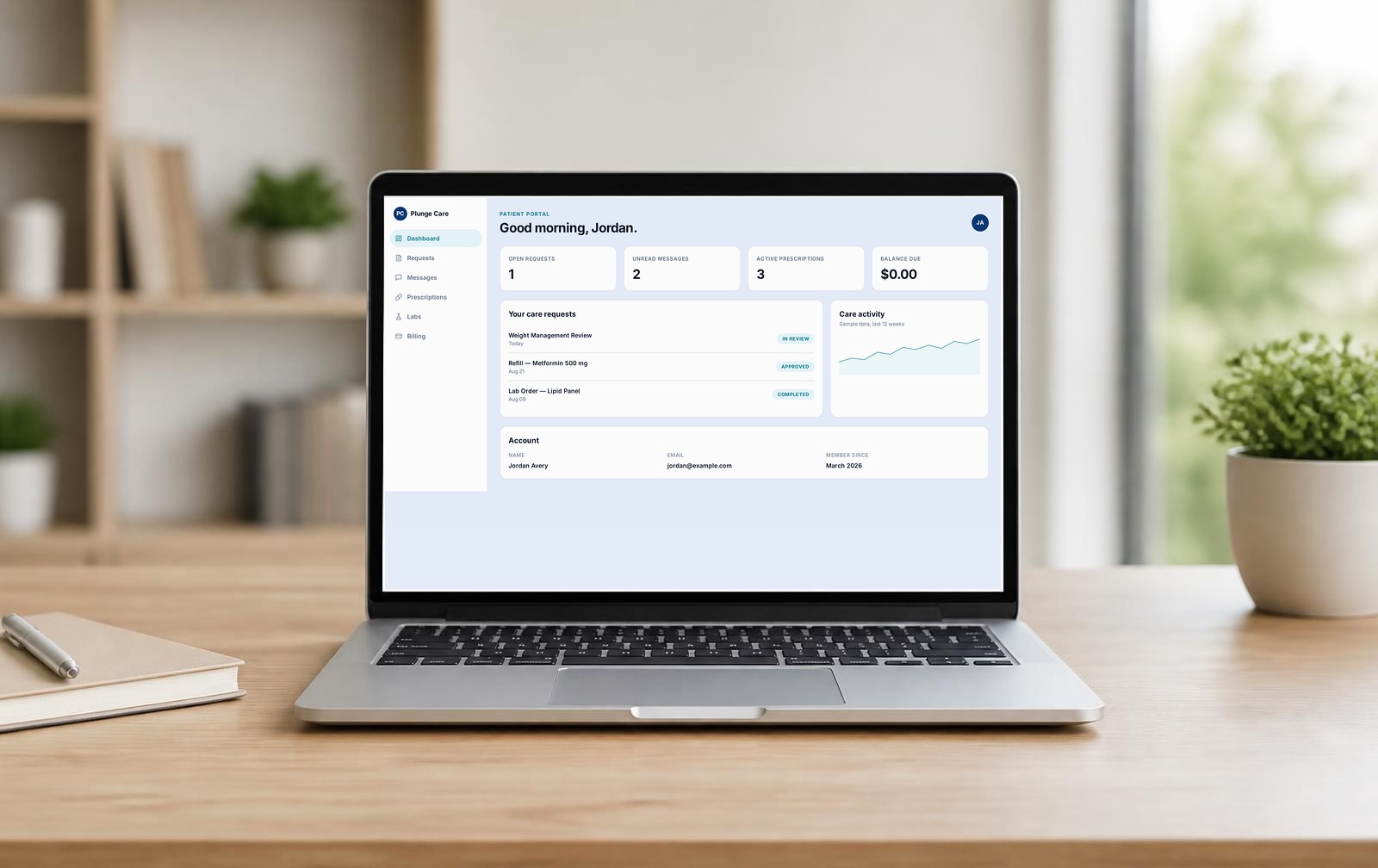
If the clinician approves the refill, the prescription is sent to the pharmacy you chose. You pick it up the way you normally would. Messages, records, and follow-ups stay in your private portal, so your care doesn't get scattered across voicemails and paperwork.
How Pricing Works
Two things are worth knowing up front.
You see the price before you confirm. There is no insurance required, no membership, and no subscription.
You're not charged unless a clinician accepts your request. If the clinician decides your request isn't right for online care, they decline it and you pay nothing. You are paying for a clinical decision, not for a prescription you were never going to get.
What Happens If the Clinician Can't Help
Sometimes the answer is no. That is the review doing its job.
A remote refill can be the wrong fit if your readings have changed significantly, if you have new symptoms, if there is a possible drug interaction, or if your situation needs an in-person exam.
When that happens, you are told directly, and you are not charged. If what you need is beyond urgent, non-emergency care, you will be pointed toward the right level of care rather than left guessing.
If the clinician can help but wants a lab result first, labs can be ordered and handled through the same portal.
How This Compares With a Clinic Visit
A clinic visit gives you a face-to-face exam. It also means a commute, a check-in desk, a waiting room, and often a bill that arrives weeks later with numbers nobody showed you in advance.
For ongoing, non-emergency medication care, what you need is a clinician who actually reads your history and your numbers, and a clear price before you commit. For anything acute or unclear, in-person care is still the right answer, and a good clinician will tell you so.
Questions People Ask Before They Start
Can a telehealth clinician refill my blood pressure medication? Yes, if you are established on the medication and your request is appropriate for non-emergency care. A clinician licensed in your state reviews your history and decides.
Do you handle urgent care? Yes, for urgent concerns that aren't emergencies, like running out of medication or side effects you want reviewed. For emergencies, call 911.
Do I need insurance? No. You see the price before you confirm, and there is no membership or subscription.
What if I don't have recent readings? Share what you have. If the clinician needs more, they'll tell you, and they can order labs if that's what's missing.
Can I get controlled substances this way? No. Controlled substances are not prescribed.
How fast is it? Most requests are reviewed the same day, and always within one business day. The clinician takes the time your history needs, because the goal is the right answer, not just a fast one.
The Bottom Line
You don't need a waiting room to keep a stable prescription stable. You need a real clinician, your history, a clear price, and an honest answer.
Real care. One clinician. No waiting room.
Start your request →
Plunge Care is a technology platform; care is delivered by independently licensed clinicians. Controlled substances are not prescribed. Not for emergencies. If you are experiencing a medical emergency, call 911.