    Health library

    Is Telehealth Going Away? What Really Happened in 2025, and Where the Rules Stand Now

    Headlines about a telehealth cliff made a lot of people think online care was ending. It is not. What was at stake was how Medicare pays for telehealth and how controlled substances can be prescribed remotely. Here is what lapsed, what was extended, and what it means for you.

    Licensed providersNo insurance neededAges 18+Not for emergencies

    The short answer: no

    Telehealth is not going away. Every state, including New York, has permanent laws defining and permitting telehealth, and private, cash-pay telehealth was never in question. The uncertainty in 2025 was about two federal things: the temporary Medicare payment flexibilities that began during the pandemic, and the temporary DEA rules that let clinicians prescribe controlled substances by telehealth without a prior in-person visit.

    Both were extended again. Medicare's flexibilities now run through the end of 2027, and the DEA's prescribing flexibilities were extended through the end of 2026 while permanent rules are finalized.

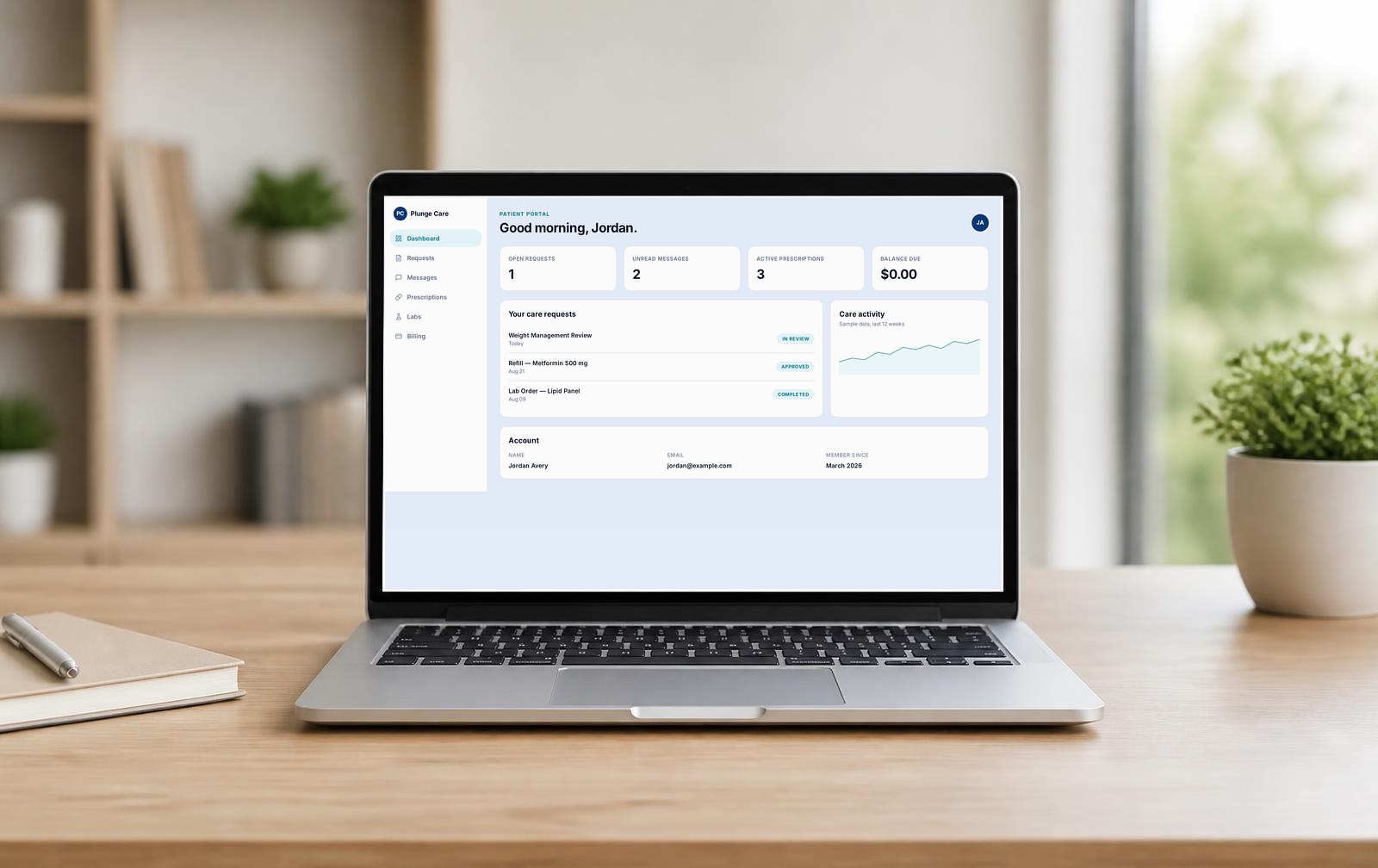
    A laptop on a clean desk showing a demo screenshot of the Plunge Care portal dashboard
    A laptop on a clean desk showing a demo screenshot of the Plunge Care portal dashboard

    What actually happened in 2025

    Medicare's pandemic-era telehealth flexibilities were set to expire on September 30, 2025. Congress did not pass a funding bill in time, the federal government shut down on October 1, and for several weeks Medicare could not pay for most telehealth visits delivered to patients at home. Clinics either paused Medicare telehealth, kept seeing patients without knowing whether they would be paid, or asked patients to sign waivers agreeing to pay themselves.

    When the shutdown ended in November 2025, Congress restored the flexibilities retroactively and extended them to January 30, 2026. Then, in early 2026, the Consolidated Appropriations Act extended them through December 31, 2027.

    None of this affected patients who were paying for telehealth themselves, patients with commercial insurance, or Medicaid patients in states that cover telehealth. It was a Medicare payment problem, and a temporary one.

    Not for emergencies. Plunge Care is not for emergencies. If you're experiencing a medical emergency, call 911.

    Clinician-led decisions. All treatment decisions are made by the reviewing licensed provider. Plunge Care does not guarantee any specific prescription or outcome.

    What the Medicare extension covers through 2027

    • Your home counts as a place you can receive Medicare telehealth, and the old rule limiting telehealth to rural areas stays waived.
    • Audio-only visits remain payable for patients who cannot or do not want to use video.
    • Federally qualified health centers and rural health clinics can continue to deliver telehealth.
    • A broader list of clinician types, including physical, occupational and speech therapists, can continue to bill telehealth.
    • The requirement for an in-person visit within six months before starting telehealth for mental health care remains waived.
    • The extension is temporary. Congress will need to act again before the end of 2027 to keep these rules, or make them permanent.

    Where controlled-substance prescribing stands

    Under federal law, a clinician normally has to see a patient in person at least once before prescribing a controlled substance by telehealth. The DEA waived that requirement during the pandemic and has extended the waiver several times rather than let it expire. The most recent extension runs through December 31, 2026, and the DEA has said it intends to finalize permanent rules before then.

    This matters for people who take stimulants for ADHD, certain anxiety or sleep medications, or buprenorphine for opioid use disorder, which has its own permanent rule allowing telehealth prescribing. It does not affect the vast majority of medications, which are not controlled.

    Many telehealth services, including Plunge Care, do not prescribe controlled substances at all, so changes to these rules do not change what they offer.

    What it means if you pay for telehealth yourself

    Nothing changed, and nothing is scheduled to change. Direct-pay telehealth is governed by state law: the clinician must be licensed in the state you are in, must obtain your consent, must meet the standard of care, and must protect your information. Those laws are permanent.

    The federal debate is about who pays. If you pay a flat fee for a visit, the only rules that matter are your state's, and every state permits telehealth.

    What it means if you use insurance

    Commercial insurance coverage of telehealth is set by state law and by your plan. New York requires insurers to cover services delivered by telehealth that they would cover in person, and most states have similar coverage laws. Check your plan for copays and whether a specific service is in network.

    Medicaid coverage of telehealth is decided state by state; New York Medicaid covers a broad range of telehealth services. Medicare coverage is the piece that depends on the federal extension described above.

    The honest outlook

    Telehealth use settled well above pre-pandemic levels and has stayed there. Health systems have built it into routine care, employers and insurers offer it, and patients expect it. Congress has extended the Medicare rules every time they came up for renewal, including after letting them lapse briefly in 2025, and there is bipartisan support for making them permanent.

    The realistic risk is not that telehealth disappears. It is that specific payment rules get renegotiated, which mostly affects how clinics bill rather than whether you can get care online.

    Policy details here are current as of late October 2026. Medicare and DEA rules change; confirm current rules with CMS or the DEA if a decision depends on them.
    Frequently Asked Questions

    No. Medicare's telehealth payment flexibilities lapsed for several weeks during the government shutdown in October and November 2025, then were restored retroactively and later extended through December 31, 2027. Private and cash-pay telehealth was never affected.

    No. Medicare flexibilities run through the end of 2027, state telehealth laws are permanent, and DEA prescribing flexibilities for controlled substances were extended through the end of 2026 while permanent rules are finalized.

    Yes. Non-controlled medications, which are the large majority, can be prescribed by a licensed clinician through telehealth in every state. Controlled substances are subject to DEA rules that are still being finalized, and many services do not prescribe them.

    No. It governs what Medicare pays clinics. A self-pay telehealth visit is governed by your state's telehealth and licensing laws, which are permanent.

    How it works

    1. 1

      Create your account and share a brief health history.

    2. 2

      Submit your request through your secure patient portal.

    3. 3

      A licensed provider in your state reviews your request.

    4. 4

      If appropriate, your prescription or order is sent to your pharmacy or lab.

    A laptop on a clean desk showing a demo screenshot of the Plunge Care portal dashboard