Coverage you may already qualify for
Many people paying out of pocket qualify for coverage and do not know it. Medicaid is free or nearly free coverage for adults with income under a threshold that varies by state, and you can enroll any time of year. In New York, adults with income somewhat above the Medicaid line qualify for the Essential Plan, which has no premium for most enrollees and very low costs. The state marketplace, NY State of Health, checks all of these in one application.
If you have a job without insurance, or your employer plan is too expensive, marketplace plans with income-based subsidies can be far cheaper than the sticker price. Enrollment is open every fall, and a job loss, move or change in income opens a special window at other times.
How to talk to a doctor online for free
Truly free, on-demand conversations with a licensed clinician are rare in the United States, and most search results promising one lead to a sign-up page with a fee. The free options that do exist are narrower than the search suggests.
- Nurse advice lines: most insurance plans, Medicaid managed care plans and many hospital systems run a free 24-hour nurse line for members or the public. They can tell you whether and where to seek care, but they do not prescribe.
- Poison Control, free nationwide for medication questions and exposures, staffed by pharmacists and nurses.
- Public health department hotlines and community health workers, who can direct you to free or sliding-scale care.
- Some community health centers and public systems offer telehealth visits to their patients at the same sliding-scale price as an in-person visit, which can be free.
- Free health apps and symptom checkers can give general information but are not a visit, cannot prescribe, and should not be mistaken for medical advice.
Is it free to call 1177? Is Hello Doctor free?
These two questions come from searches that cross borders. The number 1177 is Sweden's national health advice line, staffed by nurses, and calling it is free within Sweden. It is not a US service and does not work from a US phone. The closest US equivalents are the nurse lines above and, for mental health, 988.
Hello Doctor is a South African telehealth company. Its pricing is set by that company and may be bundled with South African medical schemes. It does not serve patients in the United States, where a clinician must be licensed in your state to treat you.
If you are in the United States and searched for either, the realistic path is a community health center, a public hospital program, a nurse line for triage, or a low-cost telehealth visit.
How much is a telehealth visit without insurance?
When free care is not available or not fast enough, a direct-pay telehealth visit is usually the cheapest way to see a licensed clinician for a common problem, because there is no facility to pay for. Services price in different ways: a flat fee per visit, a membership, or a low visit fee tied to buying medication from the same company. A flat fee with no medication sales is the easiest to understand and compare.
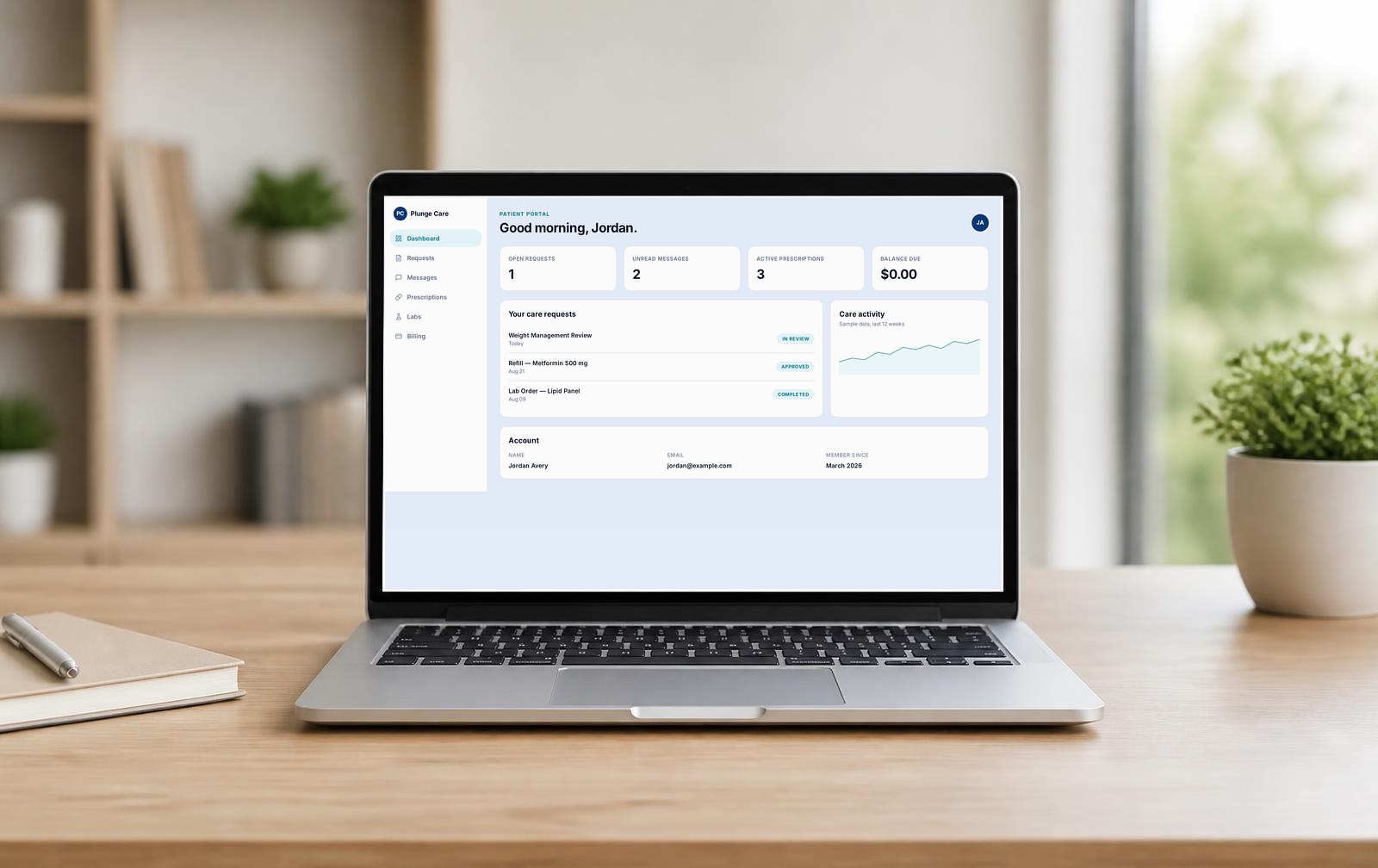
Plunge Care prices each visit as a flat fee that depends on the type of care, shown on the pricing page and again before you confirm. Nothing is charged until a clinician accepts your request, and if they decline you are not charged. Plunge Care does not sell medication; prescriptions go to the pharmacy you choose, where you can compare cash prices and use discount programs.
Making the medication affordable too
- Ask the clinician for a generic. Most common medications have one, and the difference can be large.
- Compare cash prices across pharmacies; they vary widely for the same drug, and discount cards and programs often beat the cash price.
- Check for manufacturer patient-assistance programs for brand-name drugs if your income qualifies.
- Ask about a ninety-day supply for ongoing medications; the per-dose price is usually lower.
- Tell the clinician cost is a concern. There is often an equally effective, cheaper option.
A realistic plan if you are uninsured in New York City today
- Emergency: call 911 or go to the nearest emergency room, then ask about financial assistance.
- Not an emergency, no money at all: call 311 and ask for NYC Care or the nearest public hospital clinic, or search Find a Health Center for a sliding-scale clinic near you.
- Not an emergency, some money, want it handled today: a flat-fee telehealth visit with a clinician licensed in New York, with the prescription sent to the cheapest pharmacy you can find.
- This week: apply through NY State of Health to see whether you qualify for Medicaid or the Essential Plan. Many working adults do.
Plunge Care is licensed in all 50 states and is onboarding providers nationwide; your request is routed only to a clinician licensed in your state. Plunge Care is not for emergencies.