    Health library

    How to Get a Prescription Without Insurance, and How to Afford the Medication

    You do not need insurance to get a prescription. You need a licensed clinician to evaluate you and a pharmacy to fill it, and both can be affordable if you know how the pricing works. This guide covers the cheapest legitimate ways to see a clinician, what antibiotics and common medications cost without insurance, and how to pay the least at the pharmacy.

    Licensed providersNo insurance neededAges 18+Not for emergencies

    The short answer

    Two costs are involved and they are separate: the visit, which gets you the prescription, and the medication, which you buy at the pharmacy. Without insurance the cheapest legitimate visit for a common problem is usually a flat-fee telehealth visit or a sliding-scale community clinic, and the cheapest medication is almost always the generic, bought at whichever pharmacy is cheapest that week with a discount program applied.

    What you should never do is buy prescription medication from a website that does not require a clinician's evaluation or that ships from outside the country. It is illegal, and the product may be counterfeit.

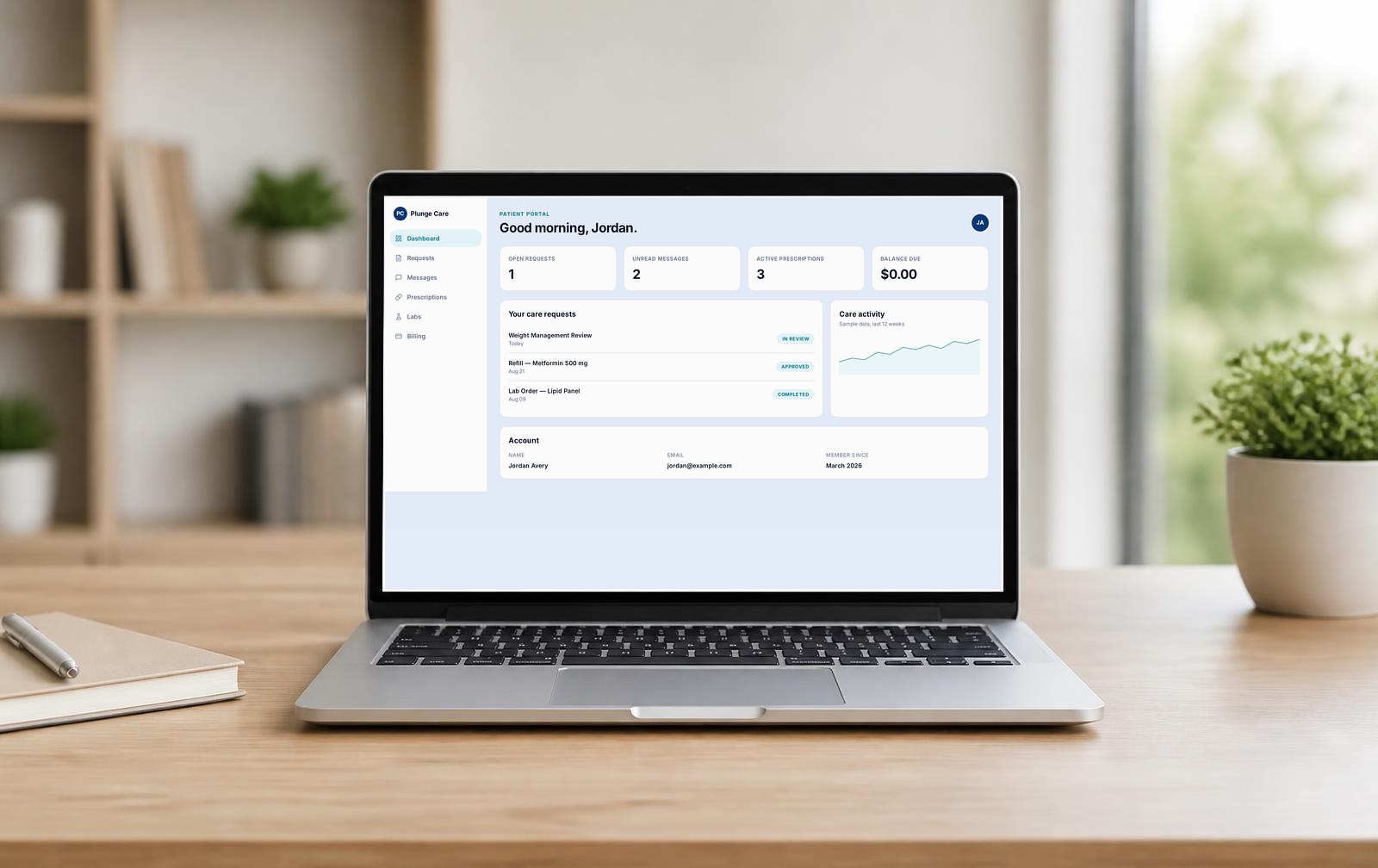
    A laptop on a clean desk showing a demo screenshot of the Plunge Care portal dashboard
    A laptop on a clean desk showing a demo screenshot of the Plunge Care portal dashboard

    What is the cheapest way to see a doctor without insurance?

    • Community health centers: federally funded clinics that charge on a sliding scale by income, sometimes nothing, and must see you regardless of insurance. Search the federal Find a Health Center directory. Best for ongoing care and anything needing an exam.
    • Flat-fee telehealth: a licensed clinician reviews your request and prescribes when appropriate, for a fixed price you see before you commit. Best for refills, UTIs, skin problems, birth control and other problems that do not need an exam. Usually the fastest route to a prescription.
    • Public hospital systems: in New York City, the public hospital clinics and the NYC Care program offer low- or no-cost care to uninsured residents; call 311. Many other cities have an equivalent.
    • Retail clinics: pharmacy-based clinics post cash prices for basic visits and vaccines; more than telehealth, less than urgent care.
    • Free clinics: volunteer-run, no charge, limited hours; the National Association of Free and Charitable Clinics has a directory.
    • Direct primary care practices: a monthly membership for unlimited primary care visits; good value if you need regular care, not for one prescription.

    Not for emergencies. Plunge Care is not for emergencies. If you're experiencing a medical emergency, call 911.

    Clinician-led decisions. All treatment decisions are made by the reviewing licensed provider. Plunge Care does not guarantee any specific prescription or outcome.

    How to get a prescription without insurance, step by step

    • Decide whether your problem needs an exam. If it does, use a clinic. If a clinician can decide from your history and photos, telehealth is cheaper and faster.
    • Check the full visit price before you give a card, and whether you are charged if the clinician cannot treat you.
    • Give a complete history: medications, allergies, conditions, and exactly what you need. For a refill, the name, strength and how you take it.
    • Ask for a generic, and say that cost matters. There is often an equally effective cheaper option.
    • Before choosing a pharmacy, compare cash prices for your medication using a discount app or by calling. Prices for the same generic vary several-fold between pharmacies in the same neighborhood.
    • Have the prescription sent to the cheapest pharmacy, and present the discount code at the counter.

    How much are antibiotics without insurance?

    Inexpensive. The antibiotics most often prescribed for common infections, including amoxicillin, cephalexin, nitrofurantoin, trimethoprim-sulfamethoxazole, doxycycline and azithromycin, are all generic, and a full course at a pharmacy with a discount program typically costs about what a fast-food meal does. Some grocery and big-box pharmacies keep a list of common generics at a fixed low price.

    The exception is newer or brand-name antibiotics, which can cost many times more. If a clinician prescribes one, ask whether a generic alternative would work for your infection. Never take leftover antibiotics or someone else's; the wrong drug for the wrong infection does nothing and breeds resistance.

    Paying the least for any medication

    • Generics first. For most common conditions the generic is the same medicine at a fraction of the brand price.
    • Compare pharmacies. Cash prices differ widely; the big chains are often not the cheapest.
    • Use a discount program. Free discount cards and apps negotiate prices that frequently beat the pharmacy's cash price; they cannot be combined with insurance, which does not matter if you have none.
    • Ask for a ninety-day supply of ongoing medications; the per-dose price is usually lower and you make fewer trips.
    • Check manufacturer assistance programs for brand-name drugs if your income qualifies; many offer the drug free or nearly free.
    • Consider mail-order and online pharmacies that are licensed in the US and verified by the National Association of Boards of Pharmacy; some specialize in low cash prices for generics.
    • Apply for coverage. Many uninsured adults qualify for Medicaid or, in New York, the Essential Plan, which cover both visits and medication. The state marketplace checks eligibility in one application.

    Mistakes that cost more

    • Going to the emergency room for a prescription refill. It is the most expensive door in health care.
    • Buying medication from a website that does not require a clinician's evaluation, or that ships from abroad.
    • Paying for a cheap visit at a service that then sells you the medication on a monthly subscription at above-pharmacy prices.
    • Filling at the nearest pharmacy without checking prices.
    • Taking the brand because the clinician wrote it, without asking whether a generic exists.

    How Plunge Care works without insurance

    Plunge Care does not bill insurance at all; everyone pays the same flat visit fee, which depends on the type of care and is shown before you confirm. You submit a written request through a secure portal, a clinician licensed in your state reviews it personally and messages with you in the same thread, and, when appropriate, sends the prescription electronically to the pharmacy you choose, usually the same day and always within one business day. Nothing is charged until a clinician accepts your request.

    Plunge Care does not sell medication, so you are free to fill at the cheapest pharmacy and use any discount program. It is licensed in all 50 states and onboarding providers nationwide, never prescribes controlled substances, and is not for emergencies.

    Approval is never guaranteed. A licensed clinician decides whether a medication is appropriate for you.
    Frequently Asked Questions

    Yes. Insurance affects who pays, not whether a clinician can prescribe. A flat-fee telehealth visit or a sliding-scale clinic can evaluate you and send a prescription to your pharmacy.

    For problems that do not need an exam, a flat-fee telehealth visit followed by filling the generic at the cheapest pharmacy with a discount program. For problems that need an exam, a community health center on a sliding scale.

    Common generic antibiotics are inexpensive, usually a few dollars to a few tens of dollars for a full course with a discount program. Brand-name and newer antibiotics cost much more.

    Yes. The pharmacy does not know or care how the visit happened. Present the discount code when you pick up.

    No. Nothing is charged until a clinician accepts your request.

    How it works

    1. 1

      Create your account and share a brief health history.

    2. 2

      Submit your request through your secure patient portal.

    3. 3

      A licensed provider in your state reviews your request.

    4. 4

      If appropriate, your prescription or order is sent to your pharmacy or lab.

    A laptop on a clean desk showing a demo screenshot of the Plunge Care portal dashboard