During a video or phone appointment
You join through a link or the app at your appointment time, usually from a waiting screen. The clinician confirms who you are and where you are, asks about the problem and your history, and may ask you to show something to the camera: a rash, your throat, how you are breathing, the medication bottle. They explain what they think is going on, what they recommend, and what would change the plan.
A straightforward visit runs ten to twenty minutes. If the clinician decides the problem needs an exam, test or emergency care, they will say so and tell you where to go; a good service does not charge for a visit it could not complete.
During a written, asynchronous appointment
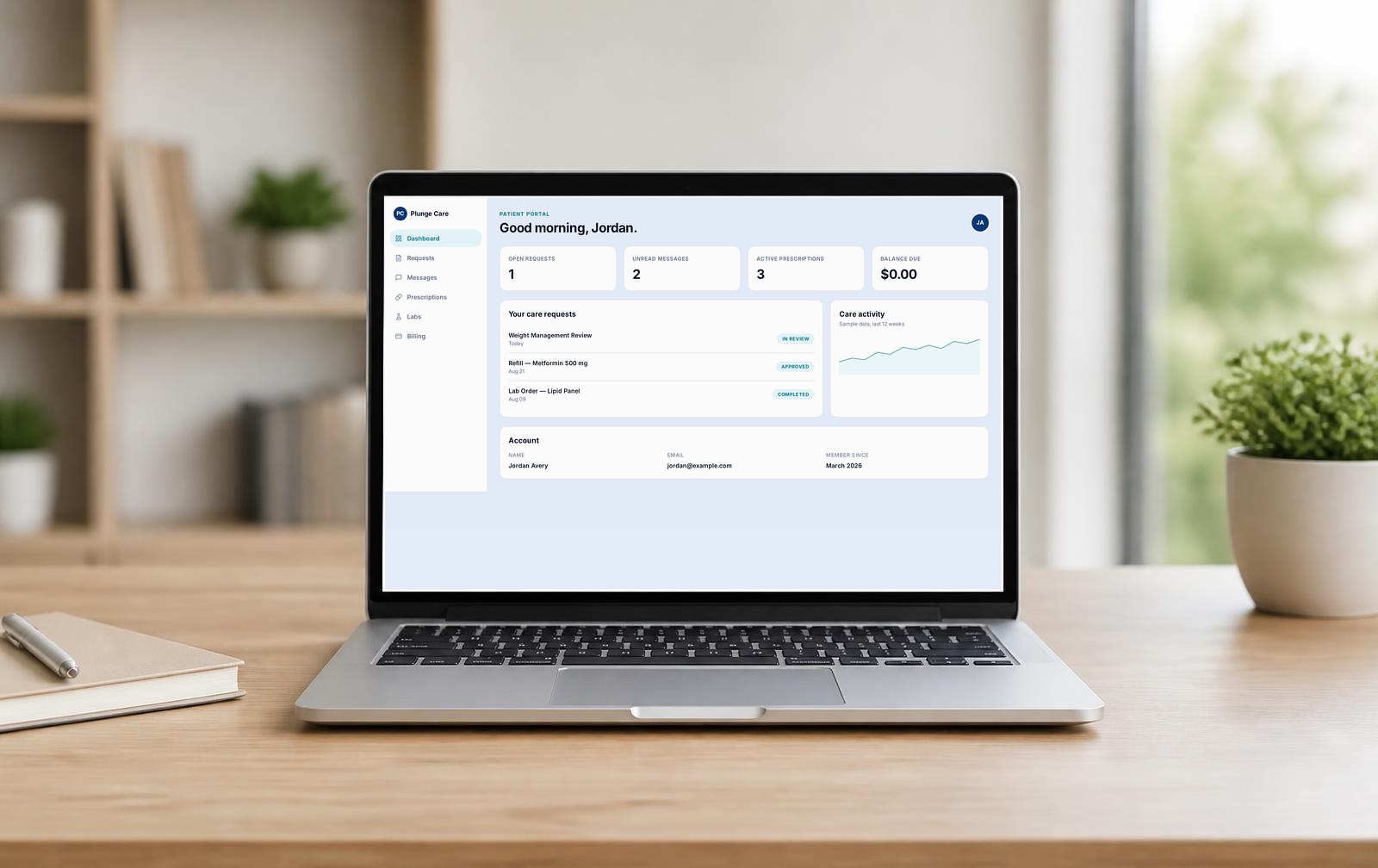
There is no appointment time. You submit your request and the clinician picks it up from a queue, reads your history, and replies in a secure thread with any follow-up questions. You answer when you can. Once they have what they need, they decide and tell you. Plunge Care works this way, with review usually the same day and always within one business day.
The advantages are speed, no scheduling, and a written record of everything said. The limit is that some problems need to be seen or heard live, and the clinician will tell you when that is the case.
After the appointment
- A prescription, if appropriate, is sent electronically to your pharmacy within minutes; the pharmacy then needs time to fill it.
- You receive a visit summary. Forward it to your regular doctor so your records stay in one place.
- You can usually message with follow-up questions; check whether that is included or billed separately.
- You are told what to watch for and when to seek in-person care.
What is a virtual GP appointment?
GP, for general practitioner, is the term used in the United Kingdom, Ireland, Australia and elsewhere for a primary care doctor. A virtual GP appointment is a video or phone visit with a primary care clinician, the same thing Americans call a telehealth or virtual primary care visit. In the US the clinician may be a family physician, internist, nurse practitioner or physician assistant.
If you are in the US and searching for a virtual GP, the equivalent options are your own primary care practice's video visits, your health plan's telehealth benefit, or a telehealth clinic.
Can I make an appointment to see my own doctor online?
Often, yes. Most primary care practices and health systems now offer video visits to established patients for follow-ups, medication reviews, test results and minor illnesses, booked through the patient portal or by calling the office. It is usually the best option when it is available: your doctor knows your history, the visit is in your record, and your insurance covers it like an office visit.
The drawbacks are availability and speed. Many practices book telehealth days out and keep limited slots. If you need something handled today, or your practice does not offer video visits, a telehealth clinic fills the gap; send the summary back to your doctor afterward.
Can you call a doctor just to ask questions? Can you chat with a doctor online for free?
You can, and the right channel depends on the question.
- Your own doctor's office: most practices answer brief questions by portal message or a nurse callback at no charge for established patients, within a day or two.
- Your pharmacist: free, immediate, and expert on medication questions such as interactions, side effects and missed doses.
- Nurse advice lines: most insurers, Medicaid plans and hospital systems run free 24-hour lines that can tell you whether and where to seek care. They do not prescribe.
- Poison Control: free nationwide for medication mistakes and exposures.
- Telehealth clinics: the fastest way to get a question answered by a clinician who can also act on it, for a visit fee. Many, including Plunge Care, let you message the clinician in the thread after the visit.
- Paid question sites and free symptom checkers: information only, not a visit, and no prescriptions.
How an appointment works on Plunge Care
Create an account, confirm the state you are in, and describe what you need in a written request through a secure portal. A clinician licensed in your state reviews it personally and asks follow-up questions in the same thread. If treatment is appropriate they send the prescription electronically to the pharmacy you choose; if your problem needs an exam, a test or emergency care, they tell you plainly and you are not charged.
Plunge Care is licensed in all 50 states and is onboarding providers nationwide. It does not bill insurance, does not sell medication, never prescribes controlled substances and is not for emergencies. You see the visit fee before you confirm, and nothing is charged until a clinician accepts your request.