    Health library

    Can Telehealth Prescribe Ozempic and Other GLP-1 Medications? What the Evaluation Really Involves

    GLP-1 medications are prescription drugs, not controlled substances, so a licensed clinician can prescribe them after a telehealth evaluation when you meet the criteria. The evaluation is more involved than a refill, and the market is full of services with very different standards. Here is how a legitimate GLP-1 telehealth visit works and how to tell it from a sales funnel.

    Licensed providersNo insurance neededAges 18+Not for emergencies

    The short answer

    Yes. Semaglutide (Ozempic, Wegovy, Rybelsus), tirzepatide (Mounjaro, Zepbound) and liraglutide (Victoza, Saxenda) are not controlled substances, so federal telehealth prescribing restrictions do not apply. A clinician licensed in your state can evaluate you remotely and, if you qualify and it is safe for you, send the prescription to your pharmacy.

    The caveats are clinical, not legal. These medications have FDA-approved indications, meaningful side effects and contraindications, and a responsible evaluation takes more than a weight and a photo. A service that approves everyone is not evaluating anyone.

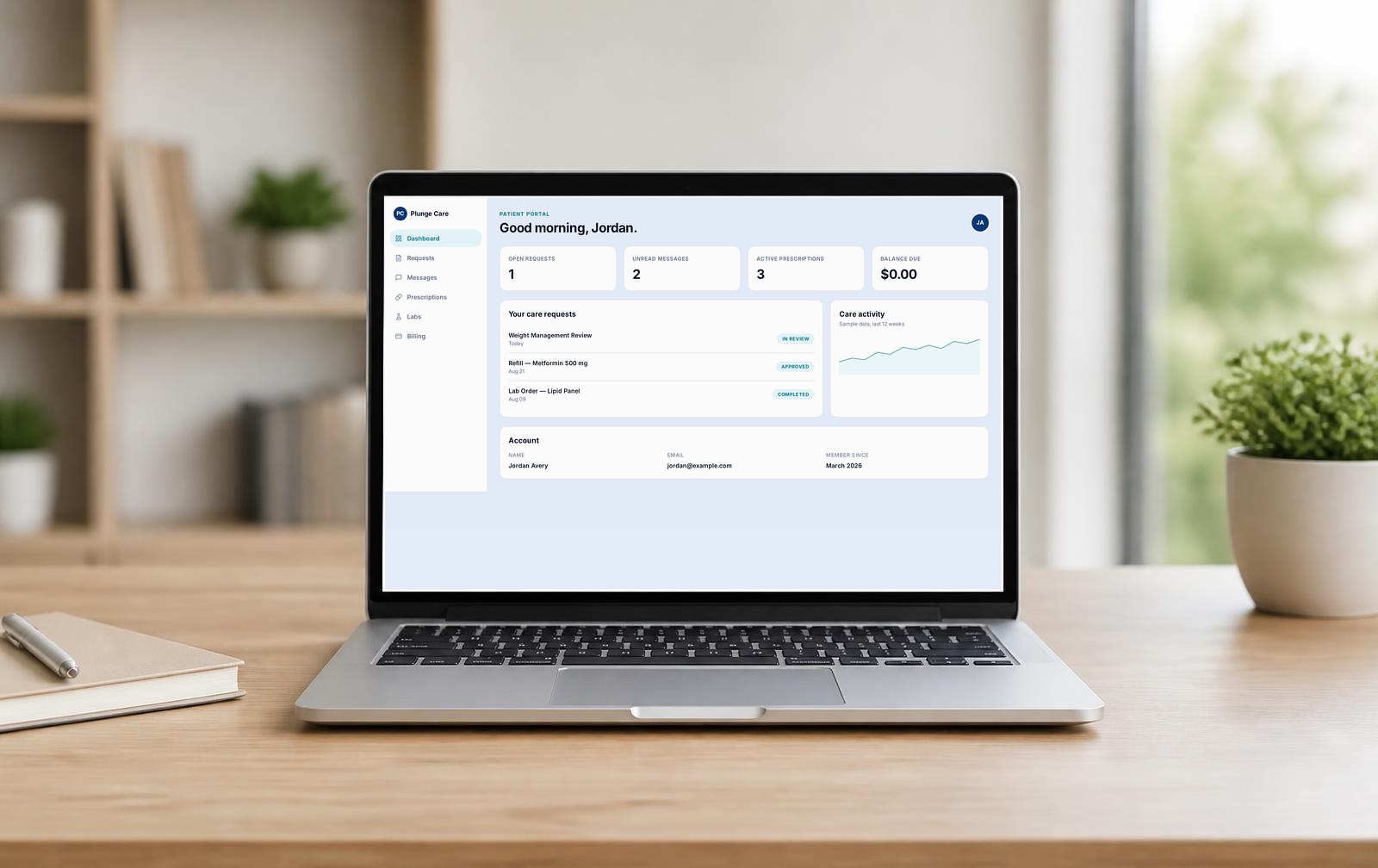
    A laptop on a clean desk showing a demo screenshot of the Plunge Care portal dashboard
    A laptop on a clean desk showing a demo screenshot of the Plunge Care portal dashboard

    Who is eligible for a GLP-1 prescription?

    Eligibility follows the FDA labels and the clinician's judgment about your overall health.

    • For type 2 diabetes: Ozempic, Mounjaro, Rybelsus and Victoza are approved to improve blood sugar control in adults with type 2 diabetes, usually alongside diet and exercise.
    • For weight management: Wegovy, Zepbound and Saxenda are approved for adults with a body mass index of 30 or higher, or 27 or higher with at least one weight-related condition such as high blood pressure, high cholesterol, type 2 diabetes or sleep apnea.
    • Ozempic and Mounjaro are sometimes prescribed off-label for weight management when the labelled weight-management versions are unavailable or not covered; that is legal and a clinician's decision, but insurance usually will not pay for off-label use.
    • Not eligible: people with a personal or family history of medullary thyroid cancer or multiple endocrine neoplasia type 2, a history of pancreatitis in many cases, pregnancy or plans to become pregnant, and type 1 diabetes for the weight-management drugs. Severe gastrointestinal disease, gallbladder disease and some eating disorders also need careful review.

    Not for emergencies. Plunge Care is not for emergencies. If you're experiencing a medical emergency, call 911.

    Clinician-led decisions. All treatment decisions are made by the reviewing licensed provider. Plunge Care does not guarantee any specific prescription or outcome.

    What a legitimate telehealth GLP-1 evaluation includes

    • A full health history: conditions, every medication and supplement, allergies, surgeries, and family history of thyroid cancer and endocrine disease.
    • Current weight and height, and the weight-related conditions that establish eligibility.
    • Recent labs, or an order for them: typically a metabolic panel, A1c, kidney function and lipids. Many services will not prescribe without recent results.
    • A review of other medications, especially insulin and sulfonylureas, which increase the risk of low blood sugar when combined with a GLP-1.
    • A plan for dose escalation and follow-up. These drugs are started low and increased stepwise over weeks, and side effects such as nausea, vomiting and constipation need managing.
    • A clear statement of what the visit costs, what the medication costs at the pharmacy, and whether insurance may cover it.

    Will Doctor on Demand or other big services prescribe Ozempic?

    Doctor On Demand, now part of Included Health, primarily serves people through employers and health plans; its clinicians can prescribe GLP-1 medications for diabetes when appropriate, and many plans route weight management through dedicated programs rather than an on-demand visit. Teladoc offers weight-management care mainly through employer and plan programs. Amazon One Medical and the pharmacy chains have launched weight-management clinics with flat visit fees. Hims and Hers, Ro and many smaller companies offer GLP-1 programs, often built around compounded versions and a monthly subscription.

    The honest summary: most major services will prescribe GLP-1 medications to patients who qualify, and they differ mainly in whether they sell the drug, whether they use compounded versions, and whether they require labs. Those three differences matter more than the brand name on the app.

    Brand-name versus compounded GLP-1s

    Brand-name semaglutide and tirzepatide are FDA-approved, manufactured under FDA oversight, and dispensed by ordinary pharmacies. Compounded versions are made by compounding pharmacies, are not FDA-approved, and were legally permitted in quantity only while the brand-name drugs were in shortage. The FDA has declared the shortages resolved and has restricted mass compounding, though some compounding continues under narrower rules and enforcement has been uneven.

    If a service offers a very cheap GLP-1 that it ships itself, ask whether it is compounded, which pharmacy makes it, and why. Plunge Care does not sell or ship medication; prescriptions go to the pharmacy you choose, where you receive the FDA-approved product your clinician prescribed.

    Warning signs of a GLP-1 sales funnel

    • Approval within minutes of a questionnaire, with no clinician questions and no labs requested.
    • No eligibility check, or a service that treats a BMI under the approved threshold without a stated clinical reason.
    • The visit is cheap or free but the medication is a monthly subscription from the company itself.
    • Vague answers about whether the drug is compounded or where it is made.
    • No plan for side effects, dose changes or what happens when you stop.
    • Claims about specific amounts of weight you will lose. Results vary and no responsible clinician promises a number.

    How Plunge Care handles GLP-1 requests

    You submit a written request through a secure portal with your history, measurements and any recent labs. A clinician licensed in your state reviews it personally, asks follow-up questions in the same thread, orders labs if they are needed, and decides whether a GLP-1 medication is appropriate and safe for you. If it is, the prescription is sent to the pharmacy you choose; the clinician stays available in the thread for dose changes and side-effect questions.

    Plunge Care does not sell medication and does not bill insurance. Weight-management and GLP-1 visits cost more than a standard visit because they take more clinical time; the exact fee is shown before you confirm, and nothing is charged until a clinician accepts your request.

    Approval is never guaranteed. Eligibility for GLP-1 medication is a clinical decision. These medications are not for emergencies and are not a substitute for diabetes care you already receive.
    Frequently Asked Questions

    Ozempic is approved for type 2 diabetes; Wegovy is the semaglutide product approved for weight management. A clinician may prescribe Ozempic off-label for weight when appropriate, but insurance usually will not cover off-label use.

    Most responsible services require recent labs or order them, typically a metabolic panel, A1c, kidney function and lipids. Starting without them is a warning sign.

    Coverage depends on your plan and the indication, not on how the visit happened. Many plans cover GLP-1s for diabetes and are stricter about weight management. The visit fee itself is separate from the medication.

    The evaluation is longer, usually involves labs, and the clinician manages dose changes and side effects over time rather than making a single decision.

    Clinicians can review requests for tirzepatide products and prescribe when you qualify and it is safe for you. The decision is theirs, and the prescription goes to your pharmacy.

    How it works

    1. 1

      Create your account and share a brief health history.

    2. 2

      Submit your request through your secure patient portal.

    3. 3

      A licensed provider in your state reviews your request.

    4. 4

      If appropriate, your prescription or order is sent to your pharmacy or lab.

    A laptop on a clean desk showing a demo screenshot of the Plunge Care portal dashboard