What mimics a UTI but is not a UTI?
Burning, urgency and pelvic discomfort have several causes, and treating all of them as a UTI is how people end up with repeated antibiotic courses that do nothing. A good clinician asks about these before prescribing.
- Vaginal infections: yeast infections and bacterial vaginosis cause irritation and burning, usually with discharge, itching or odor that a UTI does not cause.
- Sexually transmitted infections: chlamydia and gonorrhea can cause burning and discharge; herpes causes painful sores. New partner or unprotected sex makes testing important.
- Genitourinary syndrome of menopause: thinning, dry tissue after menopause causes burning and urgency that antibiotics will not help and vaginal estrogen often does.
- Interstitial cystitis or painful bladder syndrome: chronic urgency, frequency and pelvic pain with repeatedly negative urine cultures.
- Kidney stones: sharp side or back pain, often with blood in the urine.
- Irritants: spermicides, scented products, bubble bath, or simple dehydration with concentrated urine.
- Overactive bladder and, in men, prostate conditions.
What does a silent UTI feel like?
A silent or atypical UTI is one without the classic burning. It is most common in older adults, who may show only new confusion, unusual tiredness, loss of appetite, a low-grade fever, or a sudden change in continence. In people with diabetes or nerve conditions, the usual warning sensations can be blunted.
Because confusion in an older person has many causes and bacteria in the urine without symptoms is common and usually should not be treated, a suspected silent UTI needs an in-person assessment and a urine culture rather than a telehealth prescription.
What flushes out a UTI fast?
Nothing you can drink flushes out a bacterial infection; antibiotics are what resolve it, and symptoms usually ease within a day or two of starting them. What you can do is feel better while they work and avoid making things worse.
- Start the antibiotic promptly and finish the whole course, even once you feel fine.
- Drink enough water to urinate regularly, which dilutes urine and eases burning. Forcing huge volumes adds nothing.
- Use an over-the-counter urinary analgesic such as phenazopyridine for the first day or two if your clinician agrees; it turns urine orange and only masks symptoms.
- Take acetaminophen or ibuprofen for discomfort, and use a heating pad on the lower abdomen.
- Avoid caffeine, alcohol and spicy food for a few days; they irritate the bladder.
- Cranberry juice does not treat an infection. Evidence for prevention is modest and applies to concentrated cranberry products, not juice.
What can I take daily to prevent UTIs?
If you get two or more UTIs in six months or three in a year, prevention is worth discussing with a clinician. Options with evidence behind them include:
- Behavioural steps: urinate after sex, stay hydrated, avoid spermicides and diaphragms if you use them, and wipe front to back.
- Vaginal estrogen for postmenopausal women, which restores protective tissue and reduces recurrences substantially.
- Cranberry extract or proanthocyanidin supplements, which modestly reduce recurrences in some women.
- D-mannose, a sugar that may reduce recurrences; evidence is mixed but it is low risk.
- Methenamine hippurate, a non-antibiotic prescription that acidifies urine and reduces recurrences, now a guideline option.
- Low-dose daily or post-sex antibiotic prophylaxis, reserved for frequent recurrences because of resistance and side effects.
- Treating constipation and, if present, high blood sugar, both of which raise risk.
How Plunge Care handles UTI requests
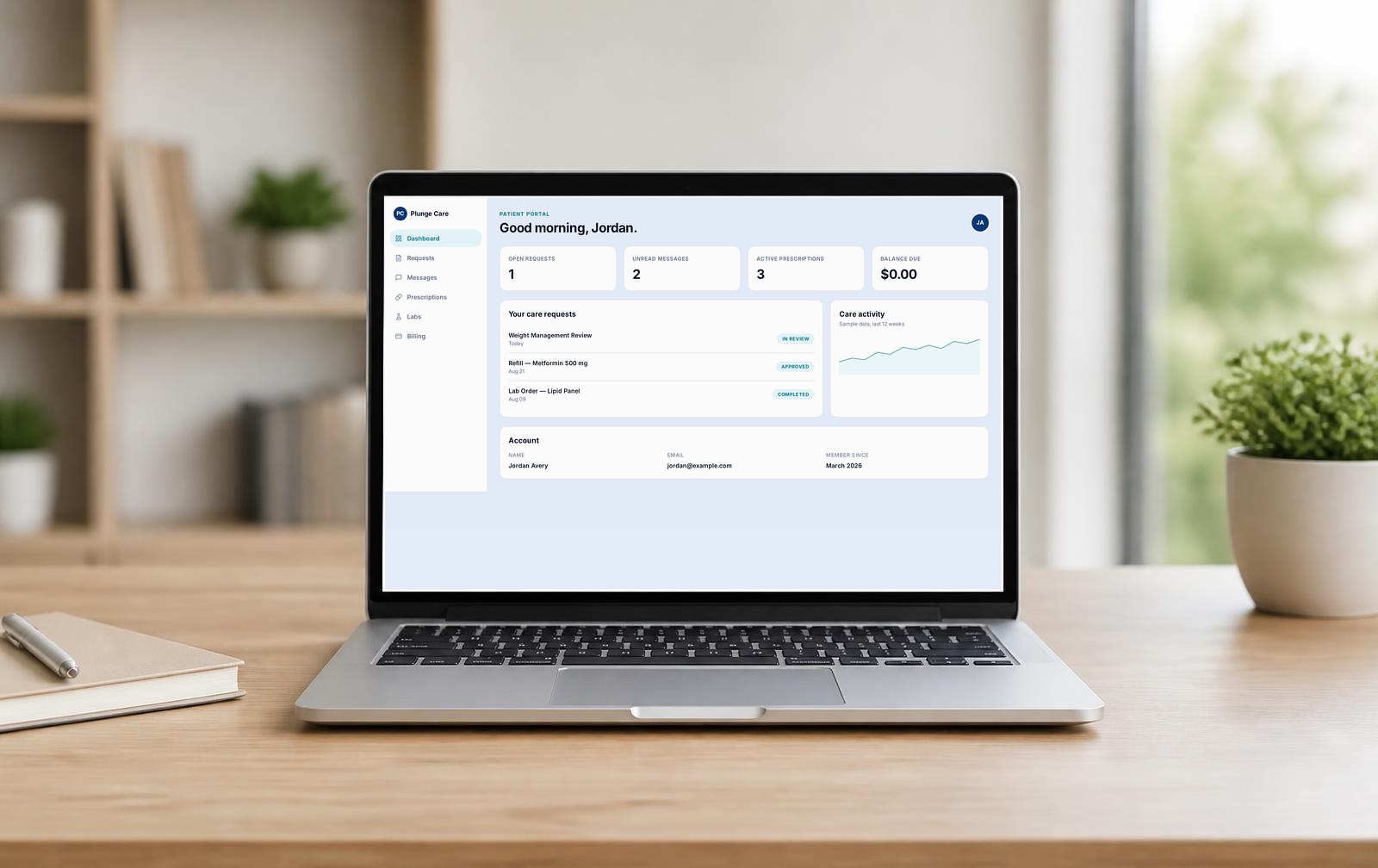
You submit a written request through a secure portal describing your symptoms and history. A clinician licensed in your state reviews it personally, asks follow-up questions in the same thread, and, when a UTI is likely and there are no red flags, prescribes treatment and sends it electronically to the pharmacy you choose, usually the same day and always within one business day. If your symptoms point to something else or need testing, the clinician tells you and directs you to the right care.
Plunge Care is licensed in all 50 states and is onboarding providers nationwide. It does not sell medication, does not bill insurance and is not for emergencies. You see the visit fee before you confirm, and nothing is charged until a clinician accepts your request.
Fever, chills, back or side pain, vomiting, pregnancy or symptoms in a man or a child need in-person evaluation. Approval is never guaranteed.