Why is telehealth called a high-risk area?
Federal regulators flag telehealth as high risk for fraud, and that is worth understanding because it explains the warning signs above. The schemes that make headlines mostly involve telemarketers who collect patients' Medicare details, pay a clinician to sign orders for braces, genetic tests or medications after a token phone call, and bill the government. The patient is a prop, not the customer.
The second risk is privacy. Some apps that call themselves health services are not covered by HIPAA and share data with advertisers. The third is licensure: a clinician treating you from a state where they are not licensed is practising illegally, however good their intentions.
None of this means online care is unsafe. It means the honest services look different from the dishonest ones, and the differences are easy to spot once you know them.
Are online doctors cheaper?
For common, non-emergency problems and for people paying out of pocket, almost always. A telehealth visit has no building, exam room or front desk behind it, so direct-pay prices for a straightforward visit run well below urgent care or an office visit. With insurance, your telehealth copay is often equal to or lower than the in-person copay.
Where online care is not cheaper is when it fails: a visit for a problem that needed an exam, followed by the in-person visit anyway. Choosing a service that is willing to decline the wrong requests protects you from paying twice.
Are online doctors worth it?
For refills, medication reviews, many infections, skin problems, birth control, mental health follow-up and questions between visits, yes. You get a licensed clinician's judgment without travel, time off or a waiting room, usually within hours.
They are not worth it, and not safe, for anything that needs hands on you: chest pain, breathing trouble, abdominal pain, injuries, ear infections in children, or anything getting worse fast. Use telehealth as part of your care, keep a primary care relationship, and send visit summaries to your regular doctor so your records stay in one place.
What is the best online doctor or telehealth app?
There is no single best one, because the services are built for different things. The right question is which model fits the problem in front of you.
- Covered by your plan: if your insurer or employer includes a telehealth service, it is often the cheapest option for you. Check your plan's telehealth page first.
- One-off problem, paying yourself: a flat-fee service with a stated price and no medication sales is the simplest and the easiest to compare.
- Ongoing relationship: membership-based primary care services make sense if you will use them often, not for one visit.
- A specific medication marketed by the company: be cautious. When the visit is cheap and the company sells the drug, the business is the drug.
- Your own doctor: many practices now offer video or portal visits to established patients, which keeps your record in one place. Ask before going elsewhere.
Is Teladoc legit? Is Doctor2U legit?
Teladoc Health is a large, publicly traded US telehealth company whose clinicians are licensed in the states they serve. It is legitimate. Whether it is free depends on your plan: many insurers and employers include it at no or low cost, and otherwise you pay a per-visit fee.
Doctor2U is a Malaysian telehealth and medication-delivery service. It may well be legitimate in Malaysia, but it cannot treat patients in the United States, where the clinician must be licensed in your state. If you are in the US and found it in search results, it is not an option for you.
What is the website to find doctors?
- Your insurer's provider directory, for in-network clinicians and the plan's telehealth option.
- Zocdoc, a free booking directory for patients that lists in-person and video appointments; the clinicians pay to be listed.
- Your state licensing board's lookup, to confirm any clinician is licensed and in good standing.
- The federal Find a Health Center directory, for sliding-scale community clinics.
- The NPI registry, a free federal database of every licensed US clinician and practice.
How Plunge Care measures up to the checklist
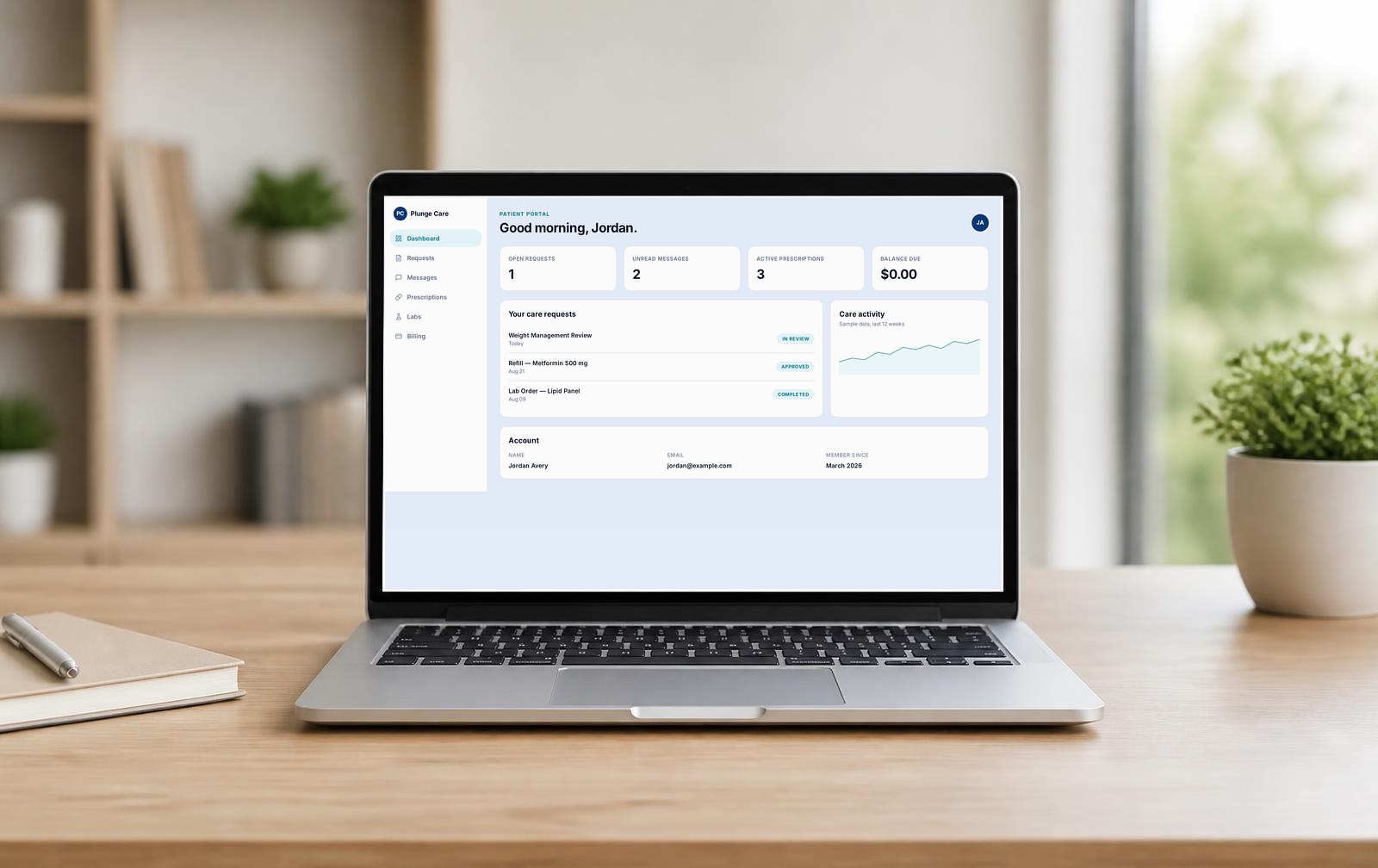
Plunge Care is licensed in all 50 states and is onboarding providers nationwide. Your request is only routed to a clinician licensed in the state you are in, and you see who reviewed it. Visits are written: you submit a request through a secure portal and message with the clinician in the same thread. Prescriptions, when appropriate, go electronically to the pharmacy you choose; Plunge Care does not sell medication, does not bill insurance and never prescribes controlled substances.
You see the visit fee before you confirm, nothing is charged until a clinician accepts your request, and clinicians decline requests that need an in-person exam. It is not for emergencies.